
Quick Takeaway
The point of a bespoke bathroom is that the materials and finishes that you choose are entirely to your preference. Both marble and porcelain are durable, low maintenance materials. Porcelain tends to carry a lower cost, but marble has a distinctly natural look which can’t be replicated. During a bathroom refit, you should assess all of the pros and cons and decide which is best for your individual needs.
Table of Contents
The Beauty of Bespoke Design
What Really Matters When Choosing Bathroom Materials
Marble: The Natural Choice
Porcelain: The Practical Alternative
Design Schemes That Fit
Comparing Options
FAQs
At Stone & Chrome, we’re often talking to our clients about the plethora of tiles that they might want for their bathroom refit. With so many choices to make throughout the process, it’s easy to get decision fatigue. As experienced designers, we’re able to take some of the mental load here and offer recommendations based on our client’s preferences and ideas. Both marble and porcelain are clean and elegant finishes which work within lots of traditional and contemporary design schemes. If you’re not sure where to start, this guide should clarify things further for you.
The Beauty of Bespoke Design
Before we get into design details, in this case tiles, it’s worth taking a moment to think about the bespoke design process. This is different to choosing off the shelf solutions and catalogue based concepts. By choosing a bespoke bathroom, you’re creating a space that reflects how you live and fulfils your lifestyle needs.
A bespoke approach means you can:
- Choose materials because you love them, not because they’re the only option available
- Design around your daily routine and your home’s particular character
- Invest in quality that lasts, rather than replacing things in a few years
- Balance what matters to you practically with what brings you joy aesthetically
This freedom is wonderful, but it does mean you’ll need to make informed choices. Understanding what you’re actually getting with marble versus porcelain is a good place to start.
What Really Matters When Choosing Bathroom Materials
Over the years, we’ve noticed that certain considerations come up again and again when our clients are selecting tile material. You’ll want to think about:
Your budget: What feels comfortable to spend, and where do you want those pounds to go? Sometimes going for a high / low design approach can give you the bathroom you want without putting pressure on your purse strings. Read more about high / low design here.
Maintenance expectations: How much attention are you realistically going to give your bathroom? Smooth, non-porous surfaces like porcelain, quartz and sealed marble are easier to clean and maintain.
The look you’re after: What feeling do you want when you walk in? Natural variation or clean consistency? Are you going after a spa-like atmosphere, or an energetic, vibrant space?
How long you’ll be there: Are you investing in a bathroom for the next five years or the next twenty? Higher quality, natural materials tend to be more durable in durability or the way that they age.
Marble: The Natural Choice
Marble is natural stone in all its glory; unique and beautiful, but requires a bit of maintenance.
What Marble Brings to Your Bathroom
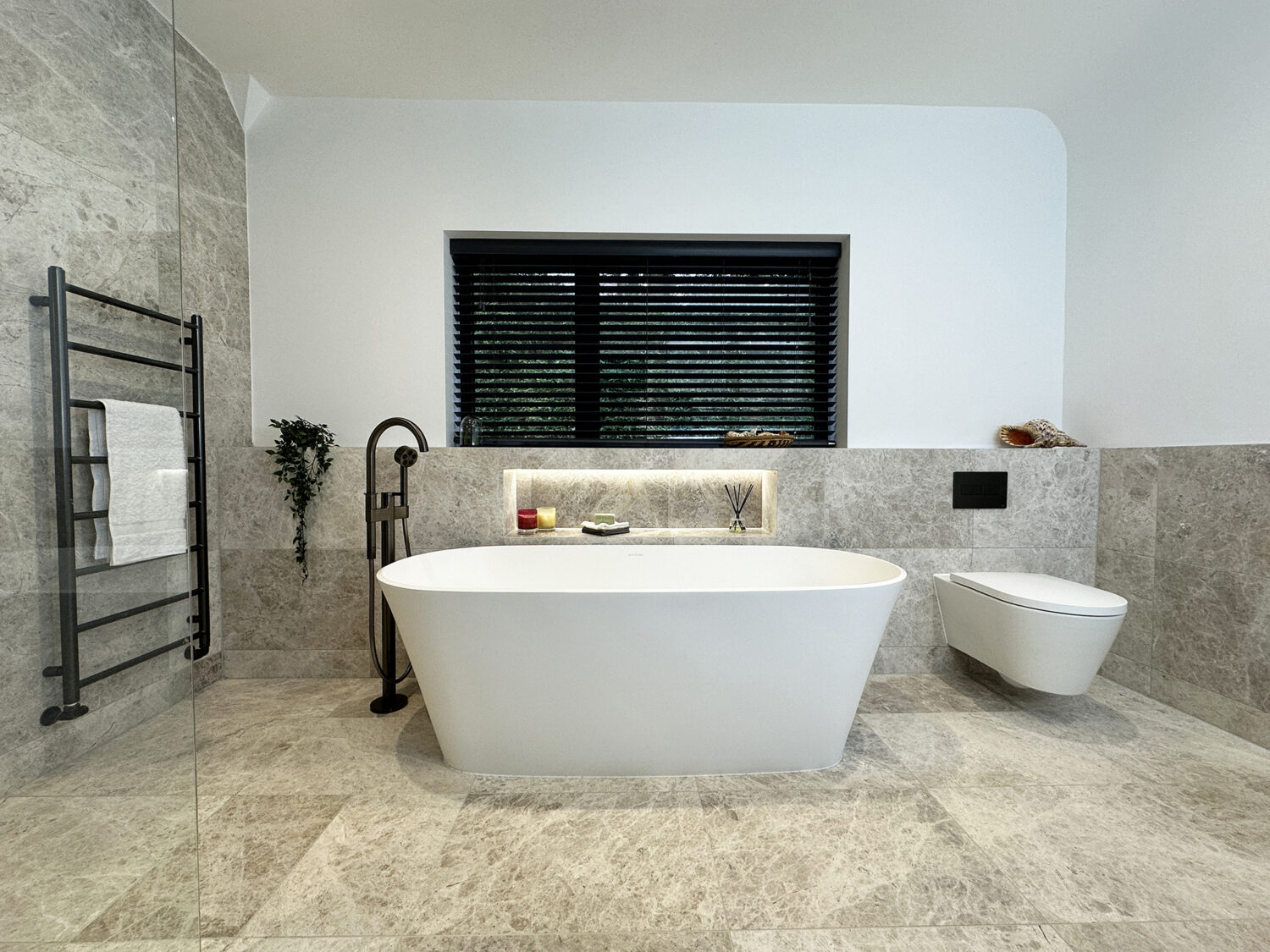
Genuine uniqueness: Each tile is different. The veining patterns are nature’s work, and no manufactured product quite captures that authenticity. If you appreciate natural materials and want your bathroom to have real character, marble delivers.
Timeless beauty: Marble doesn’t follow trends because it’s never really out of fashion. It’s the ultimate elegant choice. A well-designed marble bathroom looks just as lovely in twenty years as the day it’s installed.
Naturally cool: In warmer months, marble stays pleasantly cool underfoot. Think about under floor heating if this worries you for Winter!
Where Marble Asks More of You
The price tag: Marble typically costs more than porcelain, both for the materials themselves and the installation. You’ll need to budget accordingly.
Maintenance: Being porous, marble needs to be sealed to avoid it absorbing stains. You need to periodically re-seal tiles to maintain them. Stick to nonabrasive cleaners, too, as these can damage the surface.
Beautiful inconsistency: The natural variation is part of marble’s charm, but if you’re after a very uniform look, this might not be the choice for you.
Porcelain: The Practical Alternative
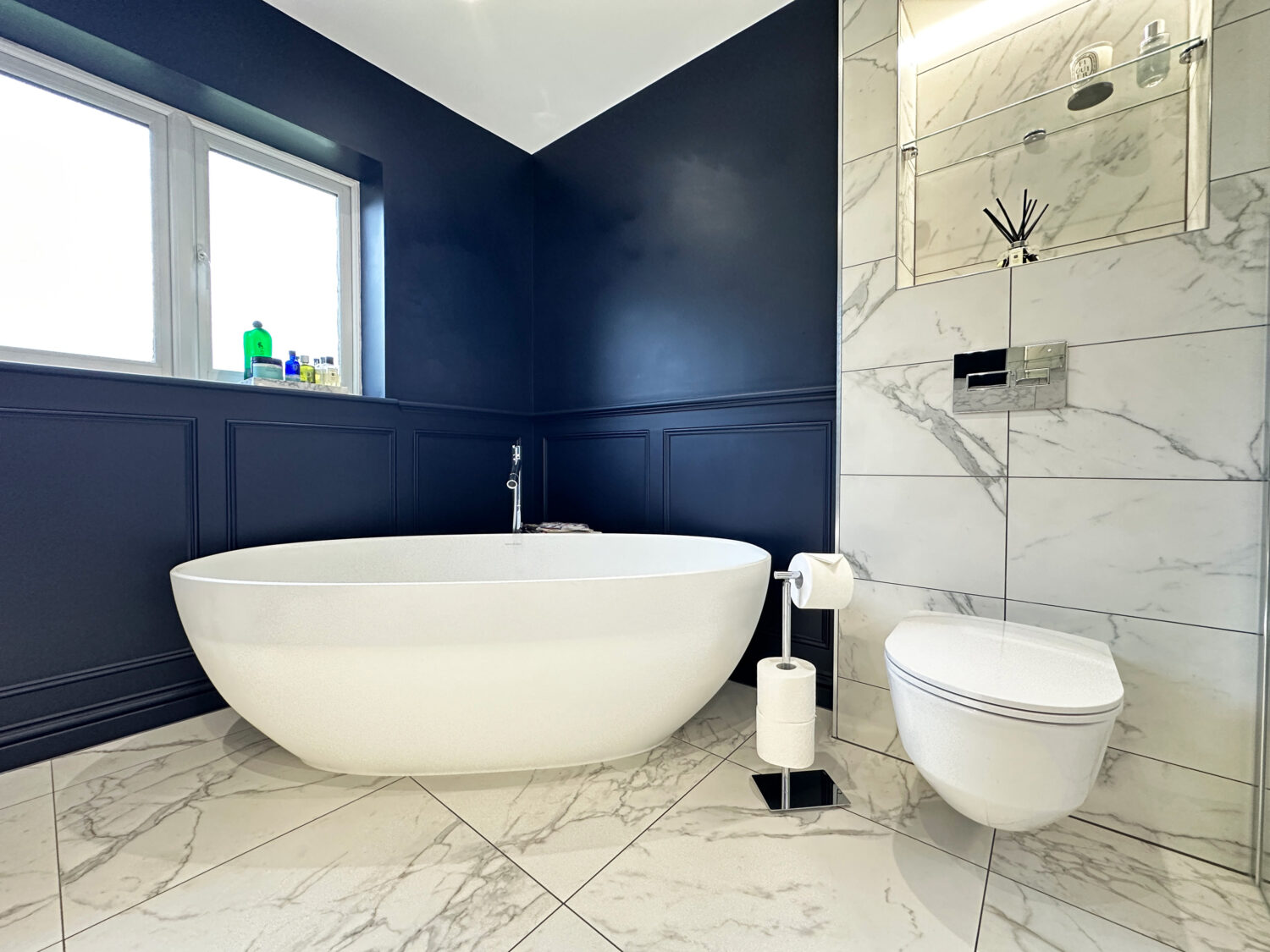
Modern porcelain manufacturing means you can now find porcelain that looks remarkably like natural stone, or indeed not! The aesthetic choices really are limitless, with any number of colours, textures, and finishes.
What Porcelain Does Well
Super low maintenance: Porcelain is exceptionally hard-wearing and ideal for high traffic bathrooms. Unlike natural stone, porcelain isn’t porous at all. There’s no sealing required and water can’t get in, which makes it naturally suited to wet areas like shower enclosures.
Better value: Generally speaking, porcelain leaves you more budget for other elements of your bathroom. Of course, there’s always a range and it depends on how designer you go, but this may be a good high/ low design choice area.
Massive choice: The variety available is genuinely impressive. Porcelain that looks like marble, wood, concrete, terrazzo… if you can imagine it, someone’s probably made it. Tiles are uniform which makes them work well for modern, consistent themes or if you want a specific tile layout such as herringbone.
Where Porcelain Falls Short
Less soul: Even excellent porcelain that mimics natural stone lacks the genuine uniqueness of the real thing. Look closely and you’ll often spot where patterns repeat.
Too much choice: If you already feel on the brink of decision fatigue, the variety that porcelain offers might just tip you over the edge! Chat to a professional designer to help to narrow down your options.
Installation: If you choose porcelain tiles in an intricate layout pattern, remember that this will take more time and expertise to install which will add to labour costs.
Design schemes that fit
Knowing where your overall aesthetic preferences lie is a great place to start when it comes to making decisions on materials. Look for signposts from specific design schemes to direct and narrow down your choices.
Classic elegance: Carrara marble paired with chrome fixtures and a freestanding bath creates that refined, timeless look that never seems to age.
Art Deco glamour: Darker marbles like Nero Marquina, combined with brass details and geometric patterns, can create something genuinely striking.
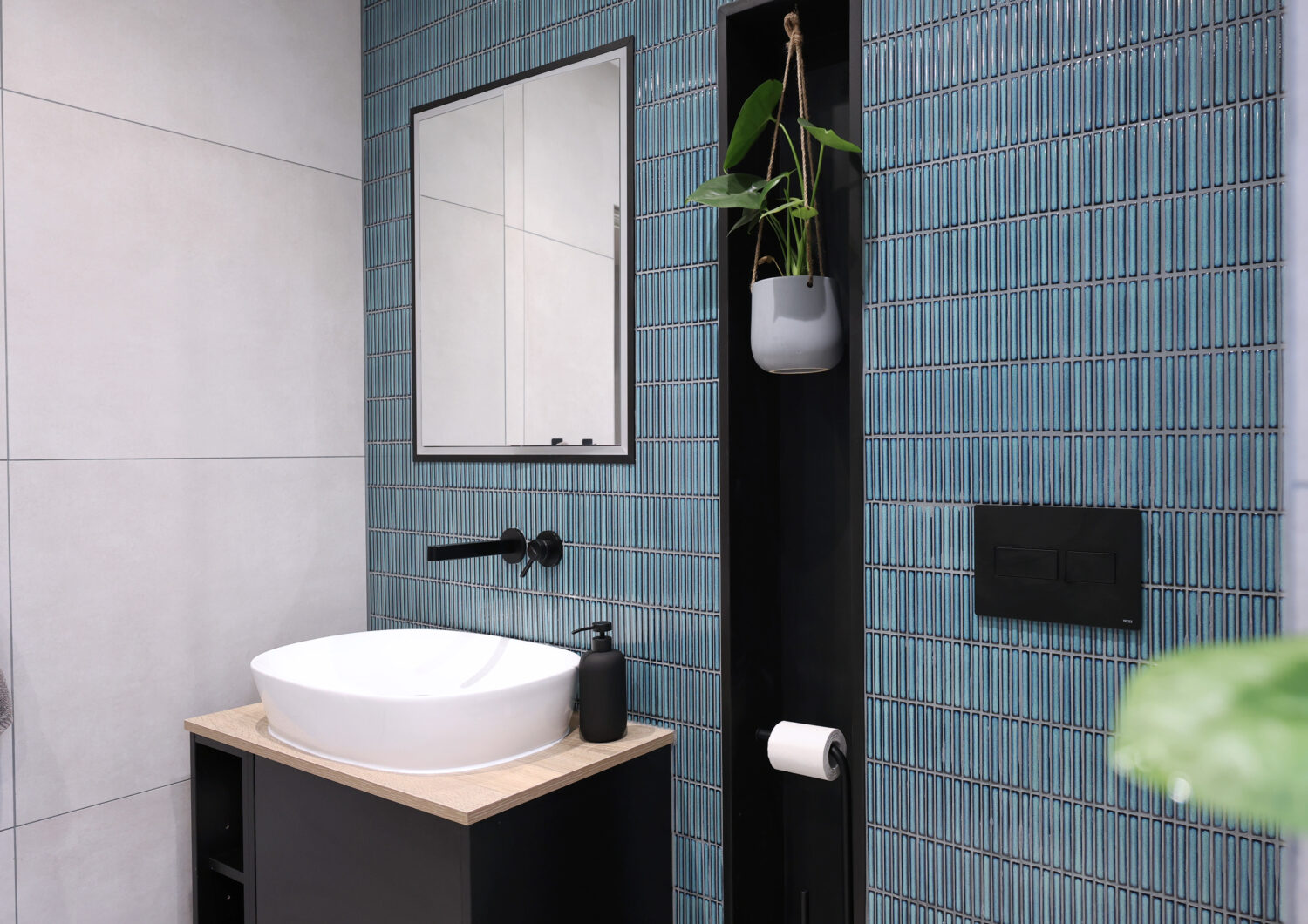
Contemporary cool: From vibrant colours to geometric tile layouts, retro and modern schemes benefit from the range that porcelain has to offer.
Calm minimalism: Large marble tiles with minimal grout lines create a flawless spa-like atmosphere. Look for green tones to highlight an organic, relaxing ambiance.
Modern precision: Porcelain’s consistency is a real advantage when you want a very exact, uniform appearance, like a sleek and hotel-inspired look.
Family bathrooms: Where durability matters and you need something forgiving of dropped bottles and teenage experimentation, porcelain makes perfect sense.
Comparing Options
| Factor | Marble | Porcelain |
| Cost | Higher | Lower |
| Maintenance | Regular sealing needed | Minimal |
| Water resistance | Porous (needs sealing) | Non-porous |
| Durability | Good (but can stain/etch) | Excellent |
| Appearance | Unique natural variations | Consistent, manufactured |
| Installation | Moderate difficulty | Can be challenging due to hardness |
| Longevity | Decades with proper care | Decades with minimal care |
| Character | High – each tile is unique | Lower – patterns repeat |

At Stone & Chrome, we’ve designed and installed bespoke bathrooms across Surrey and the home counties for many years now. We know that the ‘right’ choice isn’t universal, that it depends entirely on your circumstances, preferences, and how you’ll actually use your space. Get in touch or visit our showroom to have an honest chat about how your bespoke bathroom might look.
FAQs
Can you use marble in a shower?
Yes, absolutely. Many people do, and it looks beautiful. However, you’ll need to stay on top of sealing and maintenance because showers are constantly exposed to water and soap products.
Is porcelain always cheaper than marble?
Generally speaking, yes, but not always. High-end designer porcelain can rival marble in price, whilst some marble varieties are relatively affordable. And don’t forget to take into account installation costs. We can help to guide you to the right solution for your needs.
Can I use underfloor heating with marble and porcelain tiles?
Yes, absolutely. Both marble and porcelain are excellent conductors of heat and work perfectly with underfloor heating systems. Porcelain heats up slightly faster, while marble holds the heat for a little longer, but both will feel lovely and warm underfoot.