
Quick Takeaway
A thorough plan for your new bathroom means that you reduce the element of uncertainty that causes stress during building projects. The installation process follows structured phases, from disruptive dismantling to final decoration, and knowing what to expect when means that you stay in control. Ultimately, a well planned bathroom project, supported by experienced designers and installers, ensures a smoother experience and a high quality result tailored to how you live.
Table of Contents
Setting your budget and expectations
The value of bespoke bathroom design
Your essential planning checklist
What to expect at the showroom
What to expect during the project
The right plan makes all the difference
Frequently asked questions
Planning your new bathroom is one of those projects that sounds straightforward until you actually start. Decisions stack up quickly, budgets need careful thought, and the gap between inspiration and reality can feel daunting.
At Stone & Chrome, our team have over 30 years of combined experience guiding homeowners through luxury bathroom projects from that first spark of an idea to the finished room. We have seen what works, what trips people up, and what makes the process genuinely enjoyable rather than stressful.
Here, we’ll take you through every stage of planning your new bathroom: what to do, what to expect, and how to make confident decisions at every step.

Setting your budget and expectations
Knowing your budget before anything else prevents costly mid-project changes and keeps the design process focused from the very beginning.
For a full supply and fit of a luxury bathroom in the UK, it is sensible to plan for a significant investment. A high-specification project with bespoke elements will typically start from £15,000 and can rise considerably depending on the size of the room, the complexity of the design, and whether the plumbing layout is being reconfigured. Your choices at the layout stage have a direct bearing on the final figure.
A useful early exercise is working out what you can’t do without. Ask yourself what would make your bathroom feel lacking if it was missing? That list is your foundation. Everything else can be considered once you know what that costs.
One decision carries particular weight here: moving the soil pipe. If your budget is limited, keeping the soil pipe where it is will save a meaningful amount. Relocating drainage is one of the most significant cost drivers in any bathroom project. If you can design around the existing layout, do.
This is where bespoke bathroom design begins to earn its investment. Rather than working around standard unit sizes and hoping for the best, a custom approach starts with your space and your priorities, with designs evolving from there.
The value of bespoke bathroom design
Bespoke bathroom design maximises every inch of your space and produces a result that standardised products simply cannot replicate.
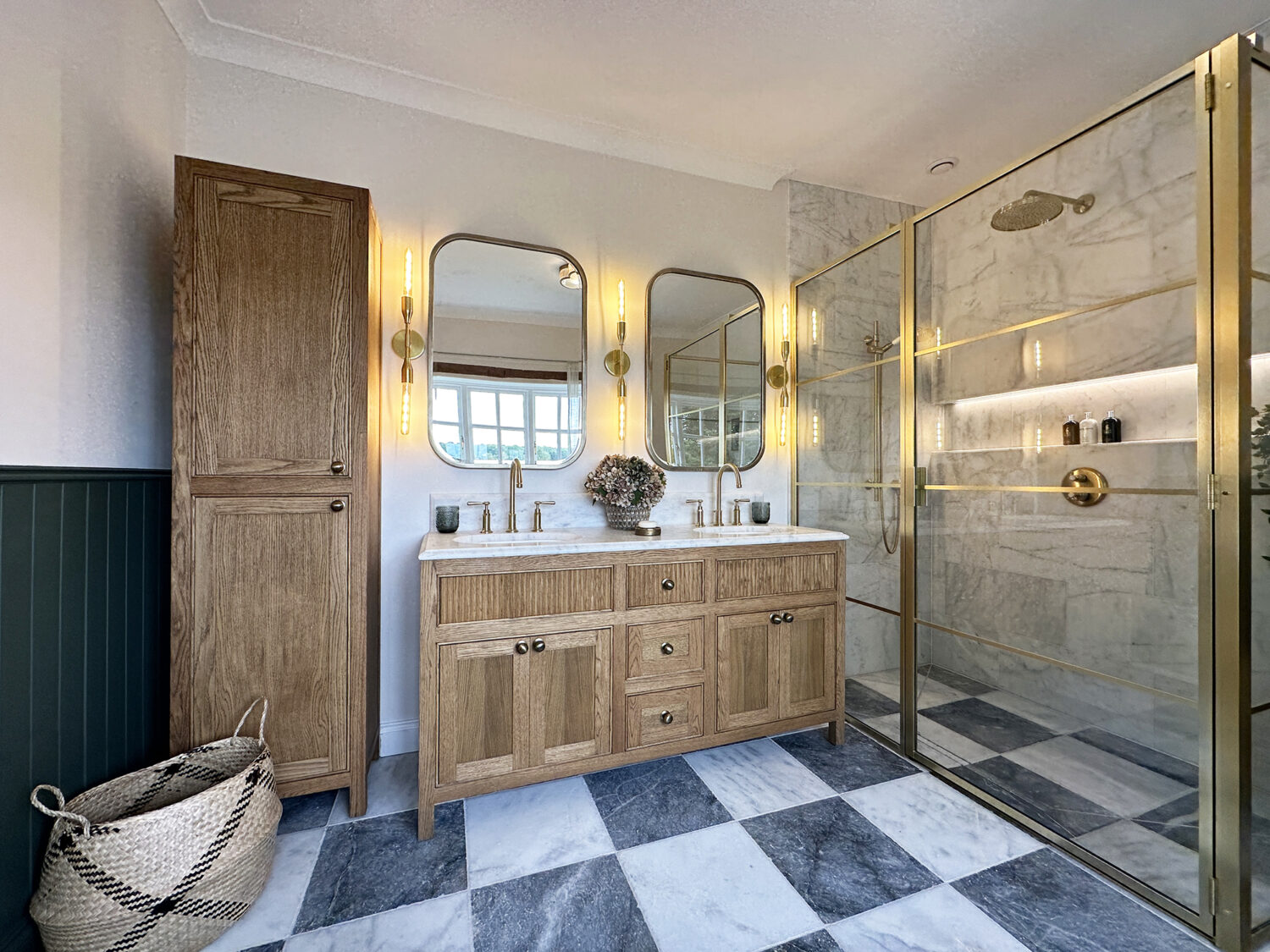
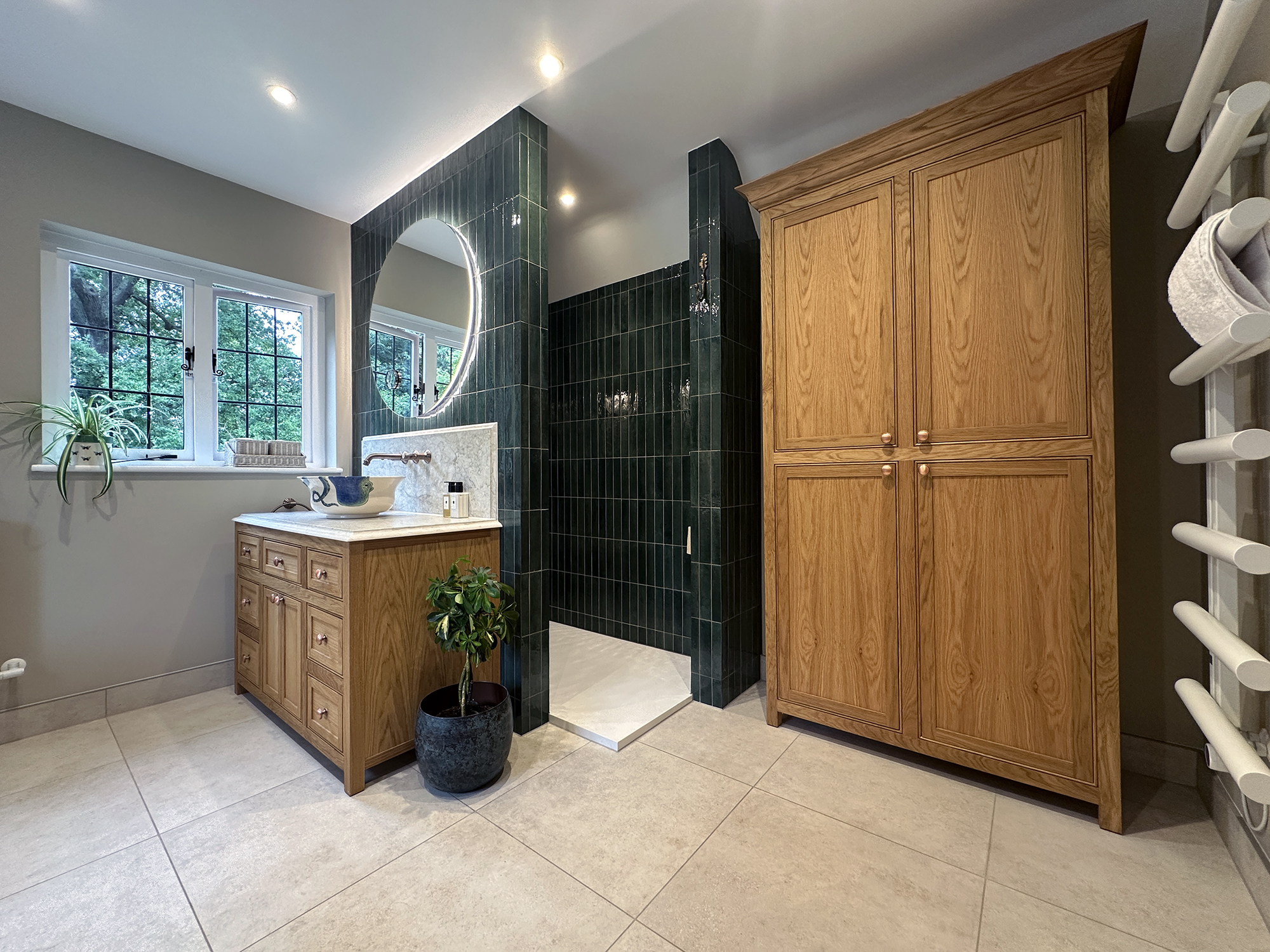
Standard bathroom furniture is designed for the average room. Yours almost certainly is not average — there is likely an awkward corner, an off-centre window, a ceiling that drops at one end, or a radiator in an inconvenient spot. Bespoke handmade furniture treats those quirks as starting points rather than obstacles.
There’s longevity to think about too. Well-made, bespoke handmade furniture is built to outlast the trends it sits within. Off-the-shelf alternatives may look the part initially, but the quality of materials, joinery and finish tell a different story over time. When you invest in bespoke cabinetry, you are investing in something that will still look and function beautifully in fifteen years.
And don’t forget that a room designed specifically around how you live, thinking about your morning routine, your storage habits, your preference for a deep soak or a powerful shower, feels fundamentally different from one assembled from a catalogue. That is what the team at Stone & Chrome designs towards: not a showroom ideal, but your ideal.
Your essential planning checklist
Your plan starts with a checklist. Before any design work begins, five things will make your project run more smoothly.
| Before your first appointment, make sure you have: ☐ Taken rough measurements of the existing space (width, length, ceiling height) ☐ Photographed or filmed the current room from all angles, including where the soil pipe, water supply and drainage sit ☐ Noted any structural limitations — sloping ceilings, load-bearing walls, existing pipework you can see ☐ Gathered inspiration from Pinterest, Instagram, magazines or showroom visits ☐ Set a realistic budget range — not a single figure, but a comfortable range with a clear ceiling |
You do not need everything resolved before you talk to your bathroom designer or visit a showroom. In fact, arriving with open questions is often more productive than arriving with fixed ideas. What matters is that you have thought about the space and have a feel for what you want it to do for you.
What to expect at the showroom
A showroom visit is the single most valuable step in planning your bathroom as it transforms abstract ideas into practical decisions.
At the Stone & Chrome showroom in Camberley you’ll see complete, real world bathroom environments rather than a display of individual products. You can see how materials sit together in real light, how cabinetry proportions feel at full scale, and how different combinations of tile, stone and hardware create different moods.
Your initial consultation is a conversation, not a sales pitch. We will ask about your space, your priorities, your lifestyle, and the constraints you are working within. From there, our designers produce detailed 3D concepts so you can visualise the finished room before a single decision is locked in. Changes at this stage cost nothing. Changes once the project has started cost considerably more, which is exactly why this process exists.
What to bring to your first appointment
- Your measurements and photographs of the existing room
- A rough sense of budget range
- Any inspiration images — do not worry if they are contradictory, that is useful information too
- Your list of non-negotiables
- Any questions about what is and is not possible in your space
What to expect during the project
Knowing what disruption to expect in advance makes the process far easier to manage, and far less stressful when it arrives.
A full bathroom renovation follows a clear sequence of phases. Understanding what happens at each stage helps you plan your household around the work rather than being caught off guard.
| Phase | What happens | Disruption level |
| 1. Strip-out | Existing suite, tiles and flooring removed. Noisy, dusty. This is the worst of it. | High |
| 2. First fix | New pipework, drainage and electrical cabling installed before walls are closed up. | Moderate |
| 3. Plastering | Walls made good. Dusty but quieter. Allow drying time before the next phase. | Low–Moderate |
| 4. Tiling | Tiles fitted to walls and floor. More precise, less disruptive. | Low |
| 5. Second fix | Sanitary ware, cabinetry, taps and fittings installed. | Low |
| 6. Final decoration | Painting, accessories, snagging and finishing touches. | Minimal |
Finalising your design marks the point at which products are ordered and the project timeline is confirmed. This is the moment to ask any remaining questions, because changes beyond this stage carry cost implications. Our team will talk you through exactly what to expect at each upcoming phase so you are never in the dark about what is coming next.
The dismantling or ‘strip-out’ phase is unquestionably the most disruptive. It is loud, dusty and the room looks considerably worse before it starts looking better. This is completely normal and is not a sign that anything has gone wrong. Most homeowners find that once first fix begins, the project starts to feel real and positive rather than chaotic.
Build contingency into your timeline from the start. Plastering drying times, a delayed delivery, or a tiling job that takes an extra day are routine and manageable if you have planned for them. They feel far more stressful if you have not.
For our clients, Stone & Chrome remains a point of contact and support throughout the installation phase. We work alongside independent, vetted installers and are on hand to answer questions and resolve anything that needs our input.
The right plan makes all the difference
Planning your new bathroom well is the difference between a project you dread and one you look back on with genuine satisfaction. The decisions you make early, about budget, layout, and the quality of materials, shape everything that follows.
With the right guidance, bespoke bathroom design is not complicated. It is a series of considered choices, made in the right order, with someone who knows how to ask the questions that matter. That is what the Stone & Chrome team has been doing since 2007.
If you’re ready to start planning your new bathroom, we would love to hear about it. Come and explore our Camberley showroom — there’s no pressure and no obligation, only the chance to see what is possible and begin making it real. Get in touch to arrange a visit or book your initial design consultation.
Frequently asked questions
How long does planning a new bathroom take from first appointment to installation?
The design and planning phase typically takes four to eight weeks, depending on how quickly decisions are made and how complex the project is. Installation of a full bathroom renovation usually takes one to two weeks. Building in extra time for plastering to dry and for any minor snagging is always sensible.
What is the average cost of a bespoke bathroom in the UK?
A high specification bespoke bathroom with supply and fit will typically start from around £15,000. Projects involving bespoke handmade furniture, premium materials, and significant reconfiguration of the plumbing layout will sit higher. The most useful thing you can do early on is set a realistic budget range rather than a single figure as this gives your designer the clarity to work within what is genuinely achievable.
Do I need to find my own installer, or does Stone & Chrome help with that?
Stone & Chrome works with a trusted network of independent installers and will match you with the right fit for your project based on location and the type of project.
What is the difference between bespoke handmade furniture and standard bathroom furniture?
Standard bathroom furniture is manufactured to fixed dimensions and a set range of finishes. Bespoke handmade furniture is designed and built specifically for your room; your dimensions, your layout, your material choices. It accommodates the realities of your space rather than asking your space to accommodate it, and is built to a quality standard that significantly outlasts off-the-shelf alternatives.