
Quick takeaway
A well designed bathroom renovation typically adds around 4-5% to a UK property’s value, according to figures from Checkatrade and architecture practice Resi. On a home in the South East at the region’s May 2026 average of £381,000, that’s roughly £15,000 to £19,000. The highest returning renovations fix a poor layout, use materials that wear well, light the room properly, and add a second bathroom where the house needs one. A purely cosmetic update rarely moves a valuation on its own.
Table of contents
Does a new bathroom add value to your home?
How much value will a new bathroom add?
Is a bathroom renovation a good investment?
The best ways to make a bathroom renovation add value
What to avoid if resale value matters to you
A bathroom that works for you first
Frequently asked questions
When you weigh up a bathroom renovation, it’s pretty impossible to know how much return you’ll see on the investment when you sell. Whether a bathroom renovation is worth it is more than financial. If you plan to sell in the medium term rather than short term, you also need to appreciate the benefit of enjoying the new bathroom yourself in the interim. So it all feels a bit opaque, which in turn can make it tricky to commit.
We’ve been designing and installing bespoke bathrooms across Surrey, Berkshire, Hampshire and London since 2007, and we’ve watched which decisions hold their worth and which fade. Here, we’ll go through what the numbers say, which upgrades buyers respond to, and where your budget does the most good.
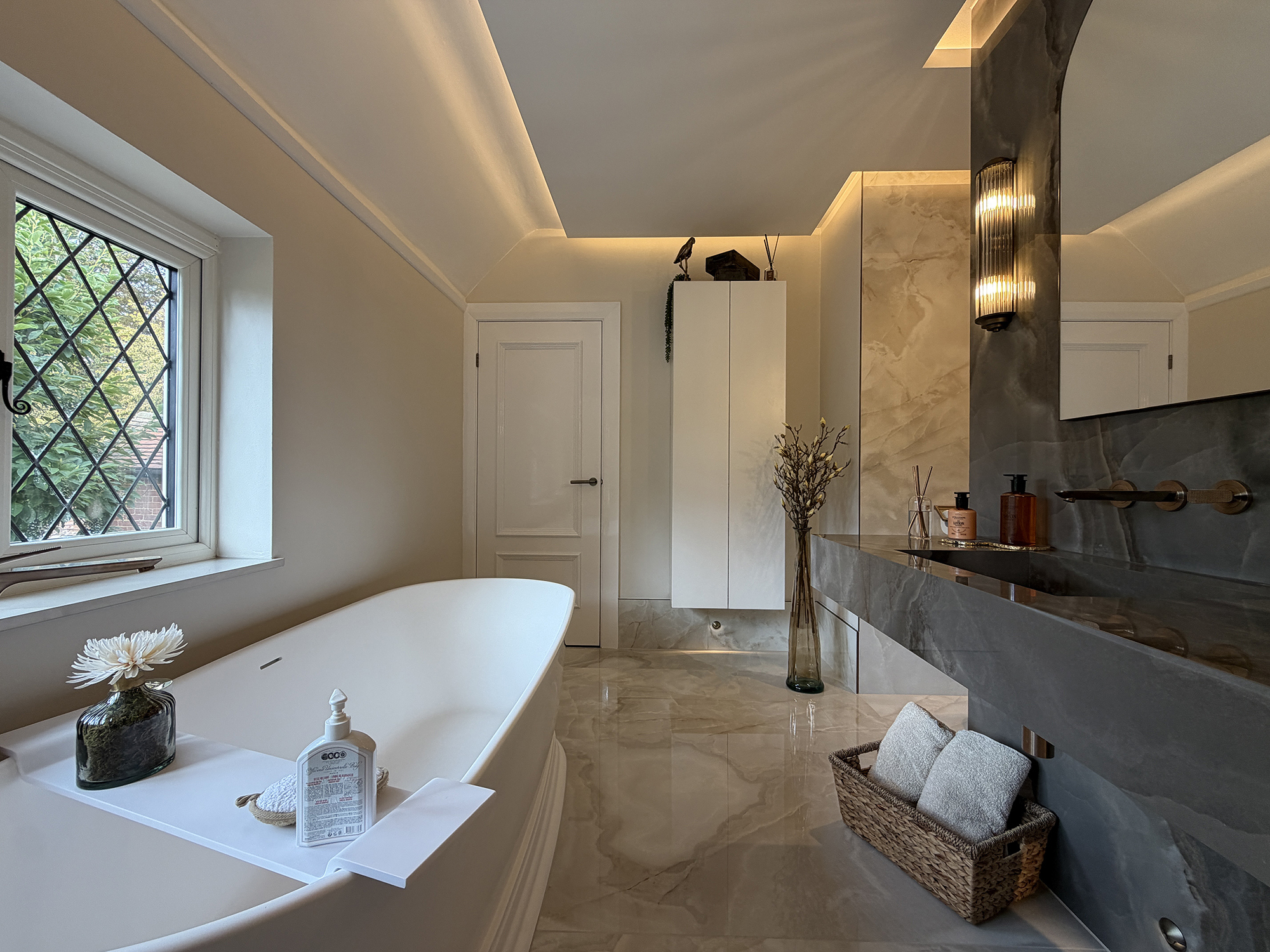
Does a new bathroom add value to your home?
Put simply, yes, a new bathroom adds value to most UK homes, though the gain depends on what you’re replacing. A tired bathroom is one of the first things a buyer prices down, because they can see a job they’ll have to organise themselves. Replacing it removes that discount and makes the house feel better maintained.
The gain is largest where the existing bathroom is poor: cracked tiling, damp patches, a suite from three decades ago, or a layout that wastes half the floor. If yours is only a few years old and in good order, a second refit won’t add much on top.
How much value will a new bathroom add?
Industry figures put the uplift at 4-5% of a property’s value: around £15,000 to £19,000 against the South East average of £381,000, and more in higher value parts of Surrey and west London. Set that against the cost. Checkatrade puts the average cost of a new UK bathroom in 2026 at £7,000, with most installations between £5,500 and £8,000 and luxury or bespoke projects starting from £14,000.
| Project type | Typical UK cost | What it does for value |
|---|---|---|
| Cosmetic refresh (retiling, taps, lighting) | From around £4,000 | Removes the “needs doing” discount, but the room still works as it did |
| Standard full refit | £5,500-£8,000 | Brings a dated bathroom up to what buyers now expect |
| Luxury or bespoke refit | £14,000+ | Adds character and finish quality within its price bracket |
| Second bathroom or shower room | Varies by property | Usually the strongest gain, especially in family homes |
Costs vary locally, and our guide to what a bathroom refit in Surrey costs sets out what drives the figure.
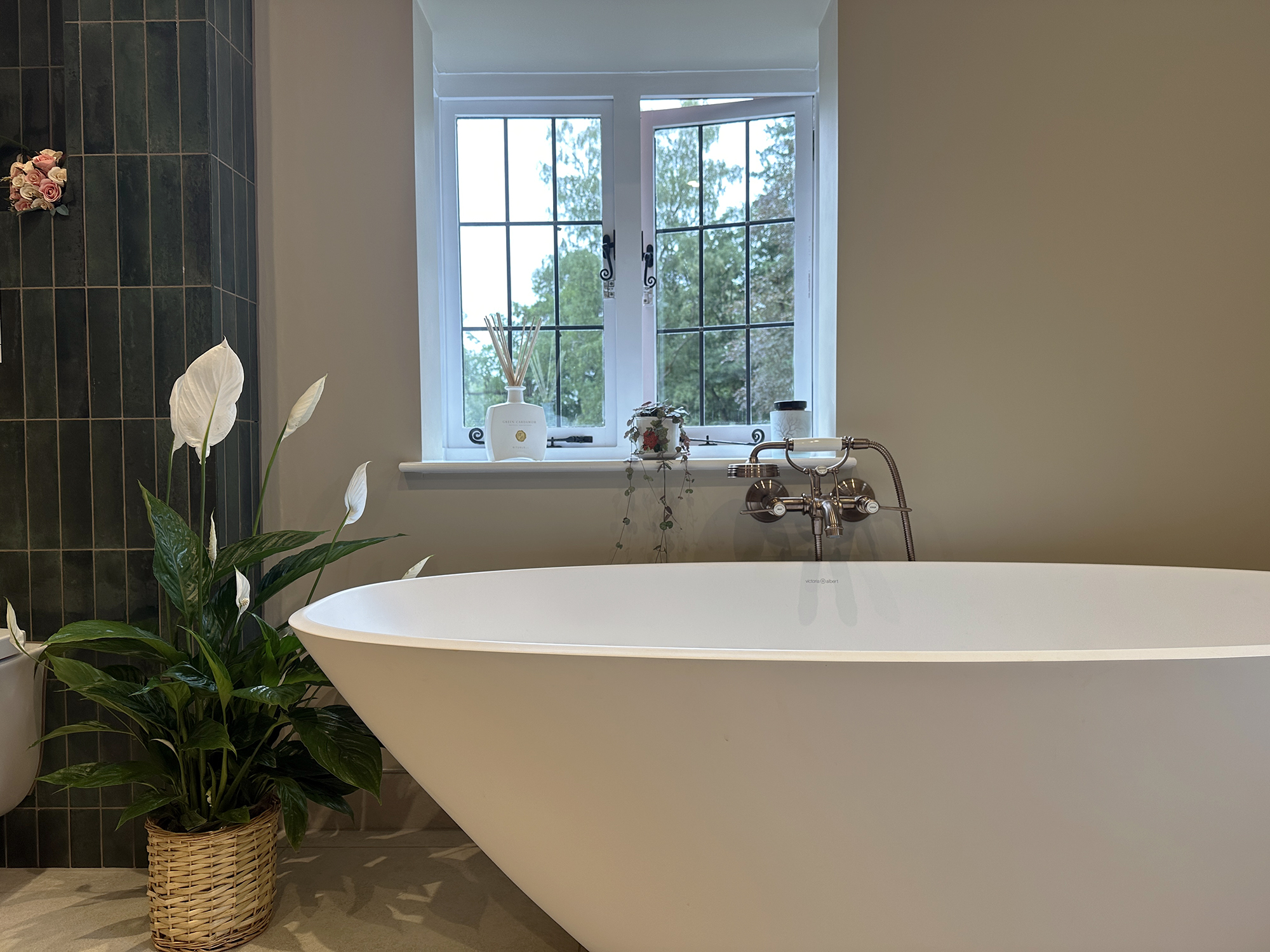
Is a bathroom renovation a good investment?
As a pure investment, a bathroom refit is reasonable rather than spectacular. You’ll usually recover much of what you spend and live with a better room meanwhile, so think of it as protecting saleability rather than making money.
Two things change that calculation. Timing matters, because value returns best when you sell within a few years, before the finishes date. So does proportion: spending £30,000 on a bathroom in a £350,000 house takes you past the ceiling your local market will pay.
The best ways to make a bathroom renovation add value
Fix the layout before you choose anything else
A cramped or awkward layout is the biggest drag on a bathroom’s appeal, and no amount of expensive tiling hides it. Moving a basin, squaring off a shower area or removing a bath nobody uses does more for a buyer’s impression than the fittings do. So it’s worth making these layout decisions early.
Choose materials that still look good in ten years
Porcelain, natural stone and well made cabinetry age gracefully. Heavily patterned tiles and trend-led colours date fast, and a buyer viewing in five years sees a room that needs redoing. Neutral surfaces with warmth in the detailing hold their appeal longest, which is part of what separates a bespoke bathroom from a simply luxurious one.
Light the room properly
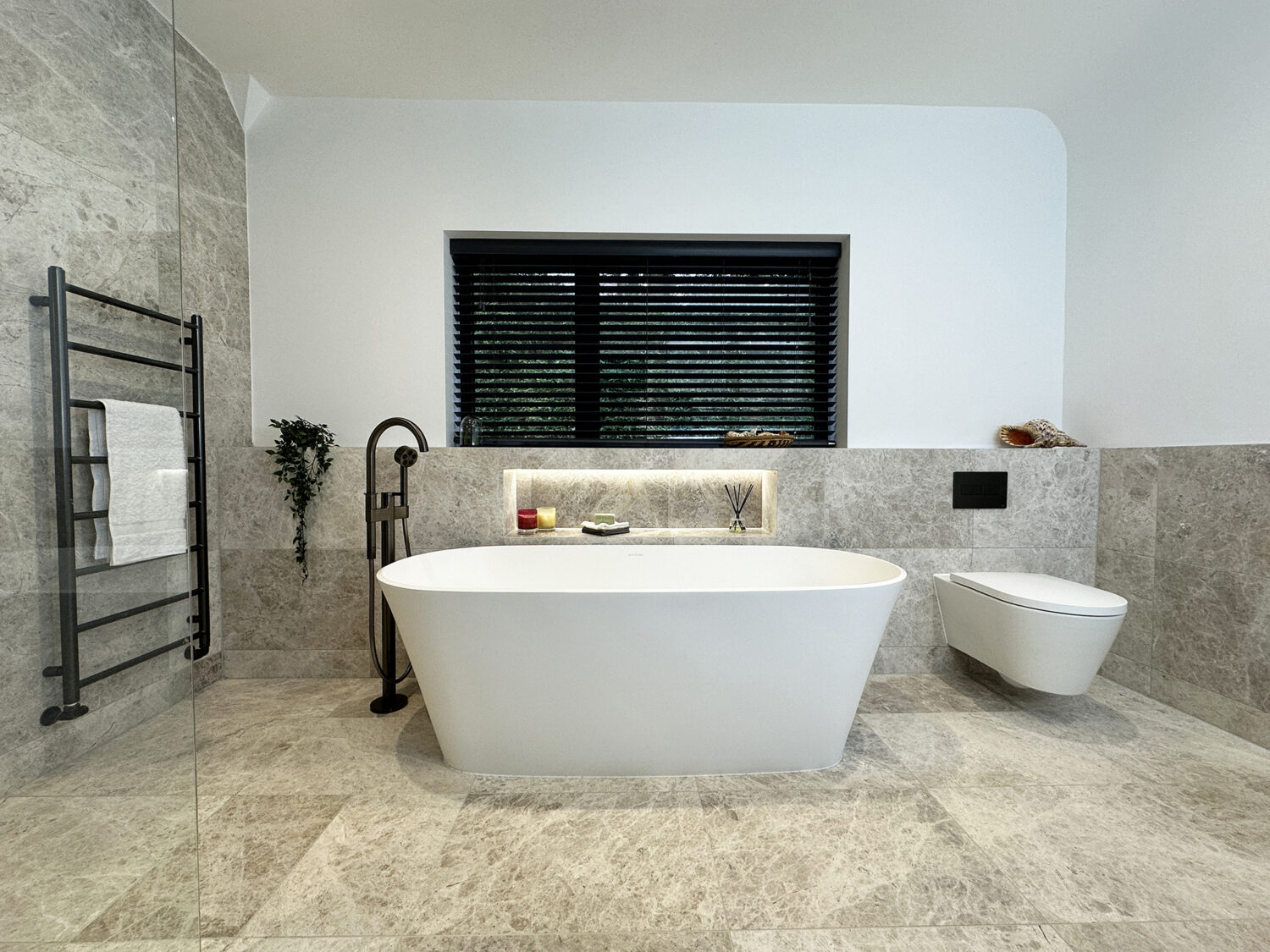
Lighting is where a mid-range bathroom starts to feel far more expensive than it was. Task light at the mirror and softer light elsewhere changes how different materials appear. Our signature detail is LED-lit recessed shelving, set into the shower wall, alongside the bath or on a display wall, giving you storage where you need it and a warm glow that flatters stone and tile.
Add a second bathroom or shower room where there’s space
A family home with one bathroom has a ceiling on what it can sell for. Converting a box room or fitting a compact wetroom into an awkward corner usually delivers the clearest return overall.
Get the parts nobody photographs right
Waterproofing, extraction, underfloor heating and sensible storage never appear in listing photos, yet they’re why a bathroom still looks good in year eight. A surveyor’s note about damp undoes far more value than a smart vanity adds.
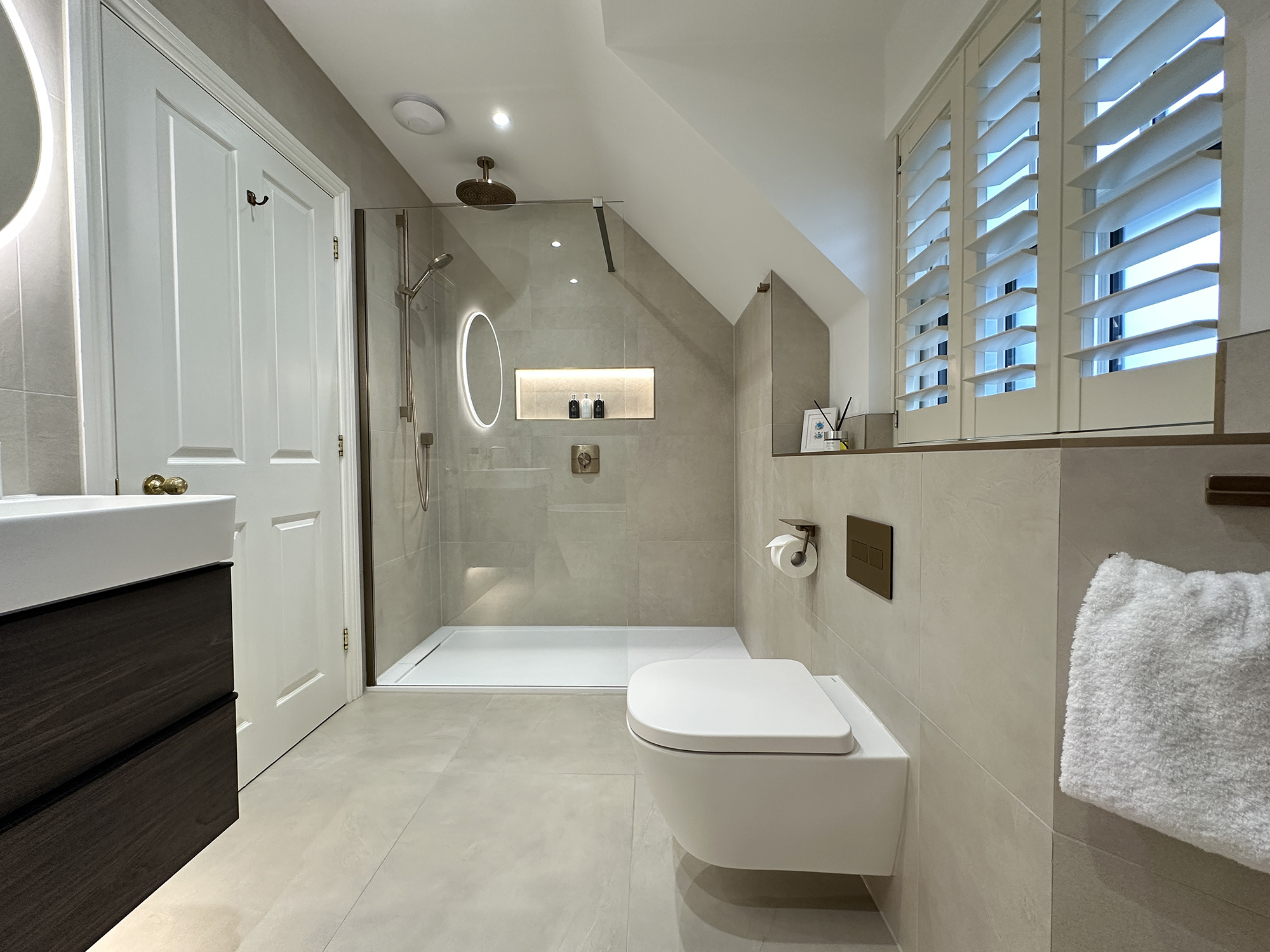
What to avoid if resale value matters to you
- Removing the only bath in a family home, which narrows your pool of buyers
- Highly personal finishes, from bold coloured suites to statement patterned floors
- Cheap fittings behind an expensive looking front, as taps and hinges fail early
- DIY tiling, waterproofing or electrics, which raise questions at survey
A bathroom that works for you first
A bathroom renovation adds value most reliably when it corrects something the house was missing: a better layout, a second bathroom, materials that wear well, and lighting that makes the room pleasant to be in. The financial return is decent, though the daily one is what you’ll notice.
If you’d like a sense of what’s possible in your space, chat to us or visit our Camberley showroom, where you’ll see complete bathrooms rather than individual products. There’s no obligation, and you’ll leave knowing what your budget will cover.
Frequently asked questions
How long does a bathroom renovation take?
Checkatrade puts the average installation at five to ten working days. A bespoke project with reconfigured plumbing, made-to-measure furniture or stone runs to two or three weeks once drying times are counted.
Does an en-suite add more value than upgrading the main bathroom?
In a home with only one bathroom, an en-suite or shower room generally adds more, because it changes what the property offers rather than improving what it has. Where there are already two or more bathrooms, upgrading the main one is the better use of money.
Should I renovate my bathroom before selling, or leave it for the buyer?
If the bathroom is dated but sound, a moderate refresh usually pays for itself by removing the discount buyers mentally apply to visible work. If it needs stripping back completely, ask your estate agent whether your local market rewards a finished bathroom or a lower asking price.