
Quick Takeaway
Creating a spa-style bathroom in a Surrey home requires close collaboration between the homeowner and a professional bathroom designer. Success depends on: choosing a designer with relevant portfolio experience; visiting a showroom to see materials and finishes in person; agreeing on a colour palette built around natural, calming tones; selecting high quality furniture and layout features; planning relaxing, layered lighting including LED-lit recessed shelving; and maintaining clear, consistent communication throughout.
Table of Contents
Choosing Your Designer
Visiting a Showroom
Deciding on a Colour Scheme
Furniture and Layout
Relaxing Lighting
Communication Throughout the Process
FAQs
Entrusting your bathroom refit to a professional designer is a significant decision. There’s the money, of course, and the disruption to your home. But beyond the practicalities, there’s that nagging worry: what if the finished result doesn’t match the picture in your head?
That worry is especially understandable when you’re going for a spa-inspired design. “Spa-style” means something different to almost everyone who wants it. For some, it’s a deep soaking tub and a sense of hush. For others, it’s natural stone, underfloor heating, and an invigorating rainfall shower. Getting this right takes more than good taste on the part of your designer, it takes thoughtful collaboration between the two of you.
At Stone & Chrome, we’ve designed and installed many spa-style bathrooms across Surrey. Here’s what we’ve learnt about making the collaboration work.
Choosing Your Designer
A bathroom designer who specialises in modern family bathrooms is not necessarily the right person for a spa-style project. These rooms have their own vocabulary; natural stone, freestanding baths, wet rooms, bespoke cabinetry, and you want someone who has worked with that vocabulary before.
When you’re looking through portfolios, look for finished projects that include the specific features you’re drawn to. It also helps to look for designers who offer full capability, including design, supply, and installation. When one firm is responsible for the whole project, it tends to be a quicker and more streamlined process.
When shortlisting designers, consider:
- Whether their portfolio includes spa-style or high-specification projects in rooms of a similar scale to yours
- Whether they have a clear design process such as briefs, technical drawings, material selection
- Whether they manage the full project from first conversation through to the finished bathroom
Visiting a Showroom
There’s only so much you can understand from a website. Tiles look different on a screen than they do on a wall, and the physical feel of a brushed brass tap only makes sense when you’ve held it. It’s also a chance to chat to the designers to gauge your rapport with their representatives.
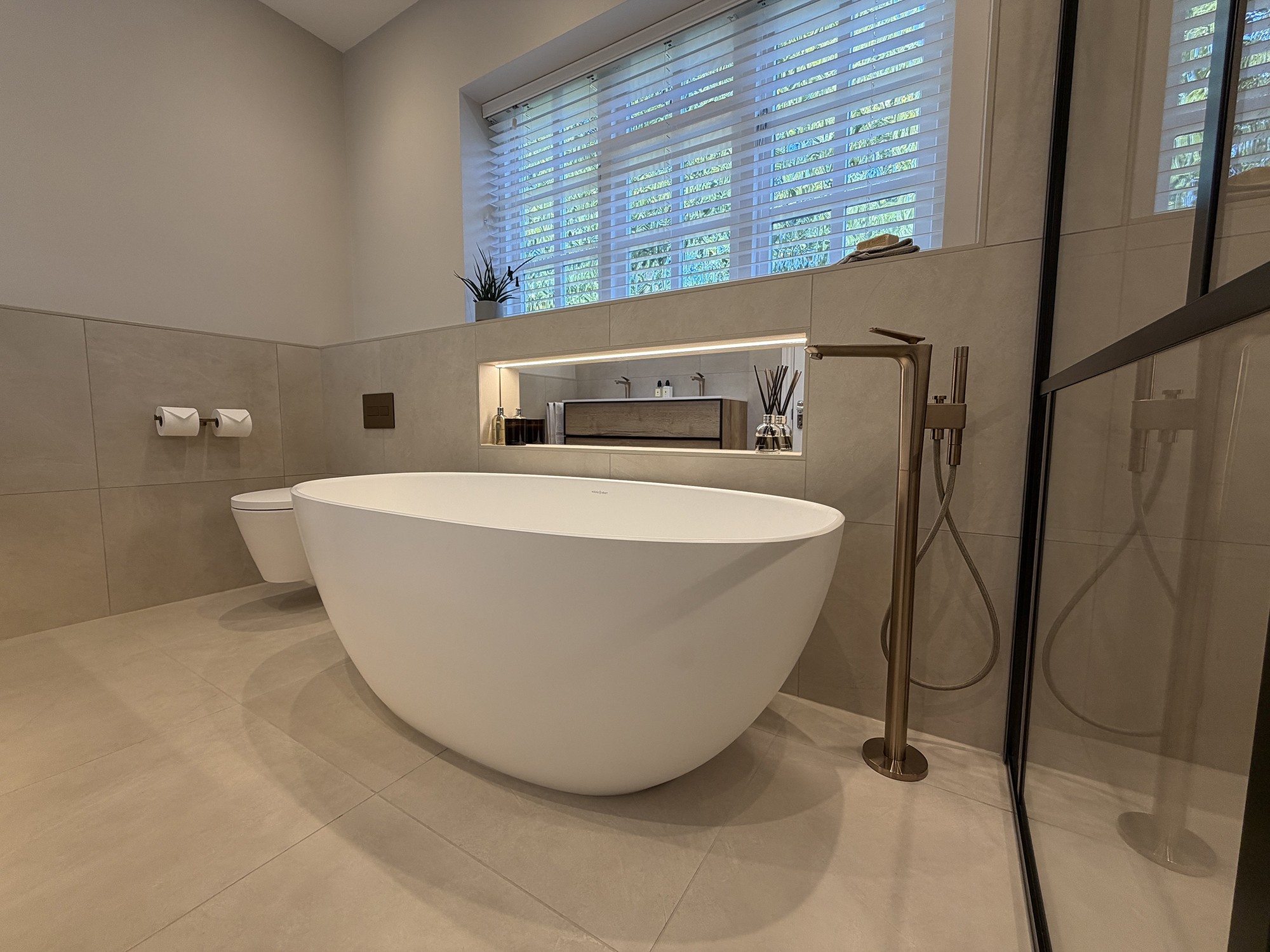
Visiting the Stone & Chrome showroom gives you the chance to see full bathroom displays and to start understanding how different materials, finishes, and fixtures actually work together in a real space. A combination of textured stone walls and dark matte fittings reads very differently in person than it does in a photograph.
Use a showroom visit to ask questions, handle materials, and start narrowing down your preferences. Equally, pay attention to whether the conversation feels collaborative, and whether the designer’s instincts seem to align with yours.
Deciding on a Colour Scheme
Spa-style bathrooms tend to draw from a relatively specific palette: soft neutrals, warm whites, stone tones, and muted greens. That said, the right scheme for your bathroom will depend on the size of the space, the natural light it has, and what you actually like to be surrounded by.
A few things to bear in mind when working through this with your designer:
- Natural stone and stone-effect tiles come in a wide range of tones, from cool Carrara-style whites to warmer travertine and slate. The tone you choose sets the atmosphere for everything else in the room.
- Natural greenery is one of the most effective and affordable ways to add to a spa-like feel. While these are an accessory for the final stages, having spots in mind for your greenery is a good idea to have from the outset.
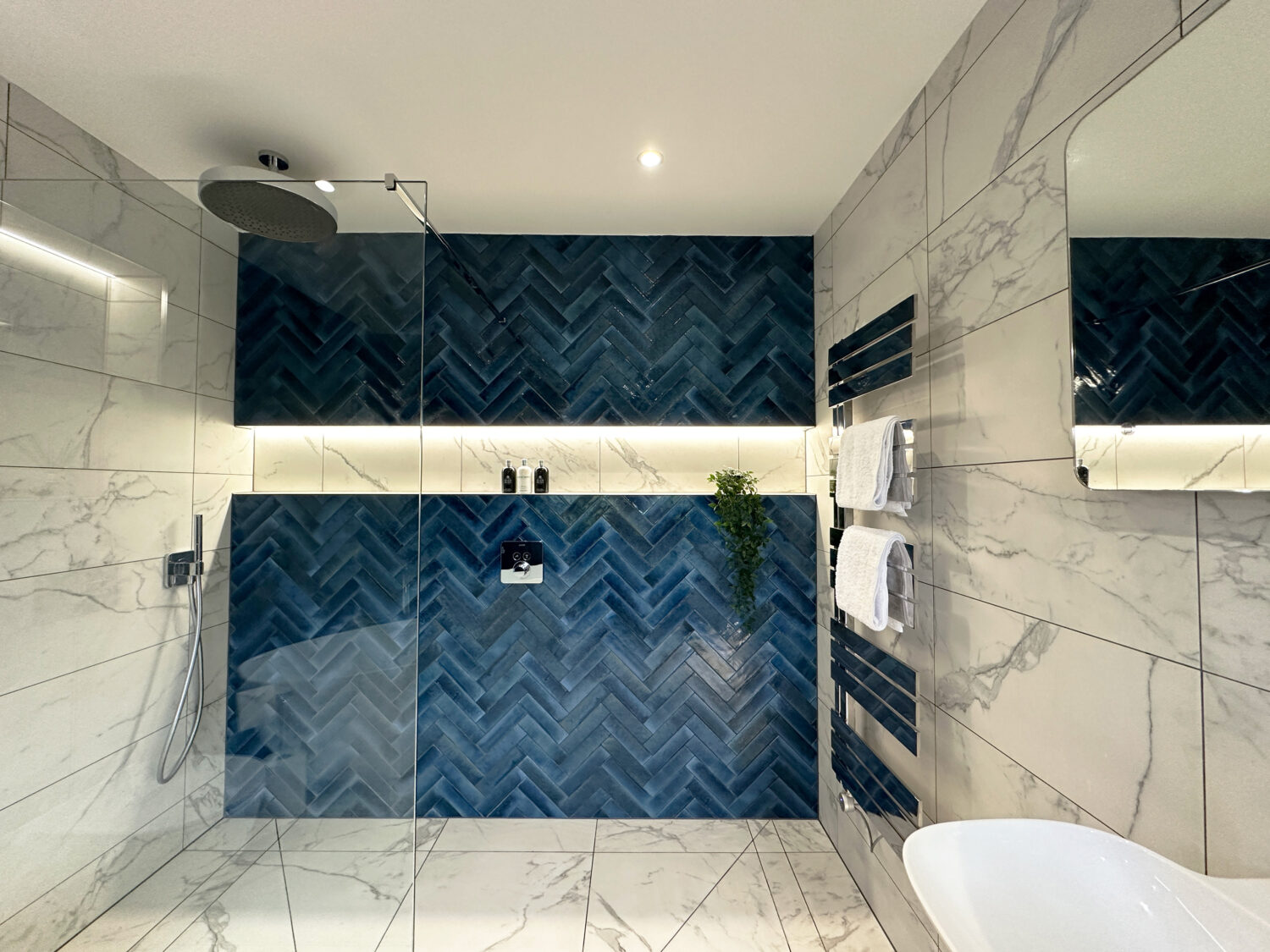
- Considered contrast tends to work well in spa-style rooms. Dark grout against light tiles, or a single deeper accent wall against an otherwise pale scheme, adds visual interest without making the room feel busy.
Don’t choose materials you haven’t seen at full scale, ideally in a lit showroom environment. Samples in a catalogue are useful for narrowing things down, but they’re not a substitute for seeing the real thing.
Furniture and Layout
This is where a good designer is invaluable. It’s natural to want a freestanding bath, a double vanity, a generous walk-in shower, and plenty of hidden storage, but it’s considerably harder to fit all of that into an actual bathroom without the room feeling crowded.
Some of the furniture and layout features that work particularly well in spa-style bathrooms include:
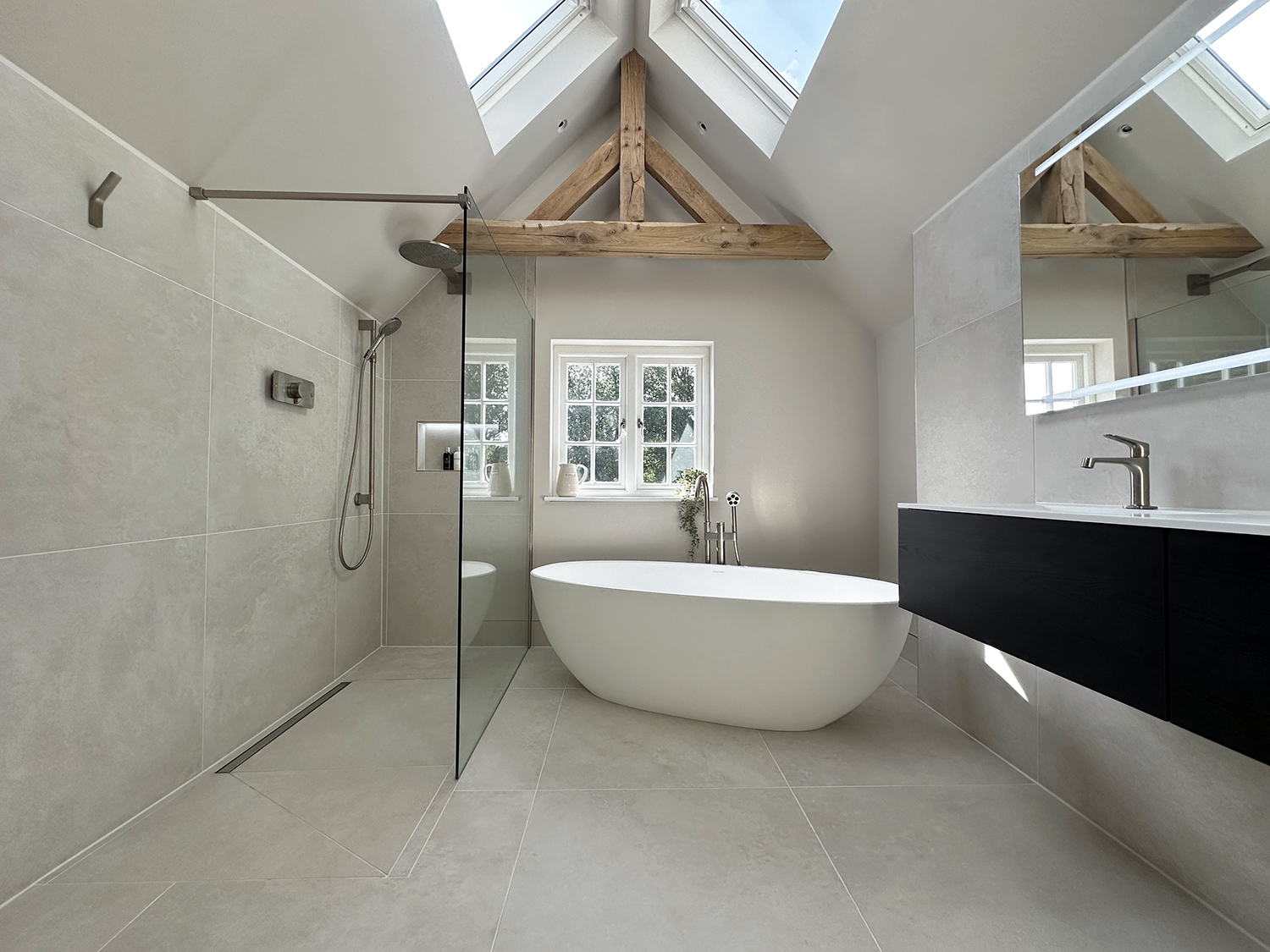
- Sunken baths, which create a strong sense of architectural intention and tend to anchor the whole room. They do require structural work, so raise this early with your designer to understand the implications for your space.
- Trough basins which are long, shallow, and wall-mounted. They look really at home as part of a spa-style concept, with clean horizontal lines and a sense of generosity at the vanity.
- Large mirrors, which serve the obvious purpose of reflecting light and making the room feel bigger, but also act as a design feature in their own right. Paired with considered lighting, your mirror can become the statement piece.
The question to keep returning to at the layout stage is: how will this room feel to move around in? A spa-style bathroom should feel calm and open, not like a game of Tetris.
Relaxing Lighting
Bathroom lighting has a dual purpose that’s easy to overlook in the planning stage: it needs to be functional enough for your morning routine, and atmospheric enough to genuinely help you switch off when you’re in ‘spa mode’. These aren’t mutually exclusive, but they do need to be planned for together.
The answer is layered lighting — combining different types of light at different levels:
Task lighting near the mirror handles the practical stuff, like shaving and make-up.
Ambient lighting, typically recessed ceiling downlights on a dimmer, controls the overall brightness of the room and gives you the ability to shift from functional to relaxed at the turn of a dial.
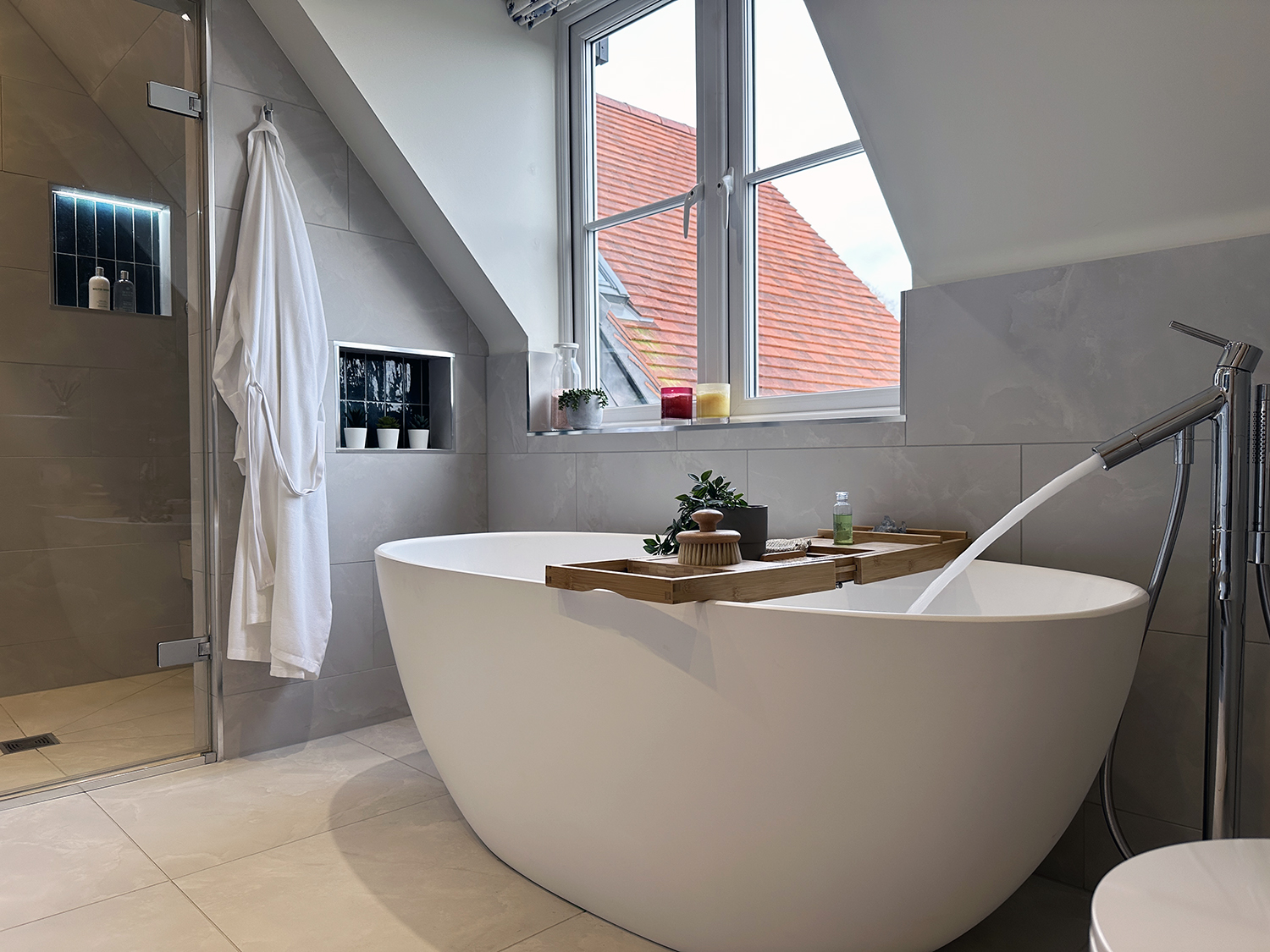
Accent lighting is where the atmosphere really comes from. Our signature LED-lit recessed shelving casts a warm, even glow through the space without any of the harshness of direct overhead light. It provides display space for towels, bottles, plants, or candles, and contributes enormously to the sense of depth and opulence that spa-style bathrooms are known for.
All of this needs to be planned at the design stage to avoid headaches later on.
Communication Throughout the Process
Something to remember is that a significant number of bathroom projects that don’t turn out quite right aren’t the result of poor workmanship. They’re the result of unclear communication at some point along the way. Both parties carry responsibility for this, and being aware of it is half the battle.
Put together a mood board. Pinterest, Houzz, or simply a folder of saved images (or those cut out of a magazine if you’re really old school) clearly communicates your taste to your designer where words might miss the mark. Don’t forget to talk about what you don’t like too, your designer isn’t a mind-reader (however good they are).
Be open about budget. There’s no need to be aspirational here! A good designer can use your budget to make sensible decisions about where to spend and where to save. This high / low approach is a skill that takes experience to apply well.
Ask questions freely. The design process should be a dialogue, and designers will happily talk you through their recommendations. If an element of the design doesn’t feel right to you, say so. It is considerably easier to adjust a plan on paper than to undo a finished bathroom.
Confirm before proceeding. At each stage, from design sign-off, tile selection, fixture specification, make sure you’re genuinely happy before the project moves forward. A pause to check is worth infinitely more than a rethink after the fact.
At Stone & Chrome, we’d love to show you what’s possible. Browse our portfolio to see completed spa-style projects in Surrey and beyond, or visit our showroom to begin the conversation in person
FAQs
How do I know if a designer has the right experience for a spa-style bathroom?
Browse online galleries in the first instance. Then when you’ve narrowed your selection, ask to see completed projects that are specifically spa-style or high-specification. Visit the showroom and have a conversation. This reveals whether you’re on the same wavelength really quickly.
How early in the process should I think about lighting?
From the very beginning. Recessed lighting, LED-lit shelving, and in-wall features all need to be built into the design before any tiling or installation starts. Lighting is one of those elements that influences a whole design scheme so it’s important to get it right.
Do I need a large bathroom to achieve a spa-style finish?
Not necessarily, though it does help. A smaller bathroom can still feel relaxing if the layout is well thought through, materials are chosen carefully, and clutter is designed out from the start.