
Quick Takeaway
A bespoke bathroom is one designed from the layout up around your specific needs, habits, and space. The most impactful areas to personalise are: the floor plan and plumbing position, storage built around your room’s quirks, lighting layered for different times of day, and one or two well chosen statement features. Stone & Chrome are award winning bathroom designers and installers based in Camberley, Surrey, working with clients across Surrey, Berkshire, Hampshire, and London.
Table of Contents
A Layout That Doesn’t Compromise
Storage That Works With the Room
Colours That Last Long Term
Furniture You’ll Love to Use
Planning Space and Flow
Lighting for Every Time of Day
Statement Features Worth Having
Frequently Asked Questions
Having a bathroom that is bespoke to your tastes and lifestyle is one of those luxuries that gives a little bit extra every day. You start the morning and end the evening in an environment you’ve built for yourself, with lighting that makes grooming effortless and wind-down genuinely relaxing.
But a truly bespoke bathroom is more than picking out light fittings and a colour scheme. From the layout up, everything is put together in a way that works specifically for you, your space, and the people who share it. At Stone & Chrome, we work with clients across Surrey, Berkshire, Hampshire, and London to build spaces that do exactly that. Here’s our guide to getting it right.
A Layout That Doesn’t Compromise
The layout is where everything else begins, and it’s the one area people most often accept without question. You don’t have to inherit an existing bathroom layout without question.
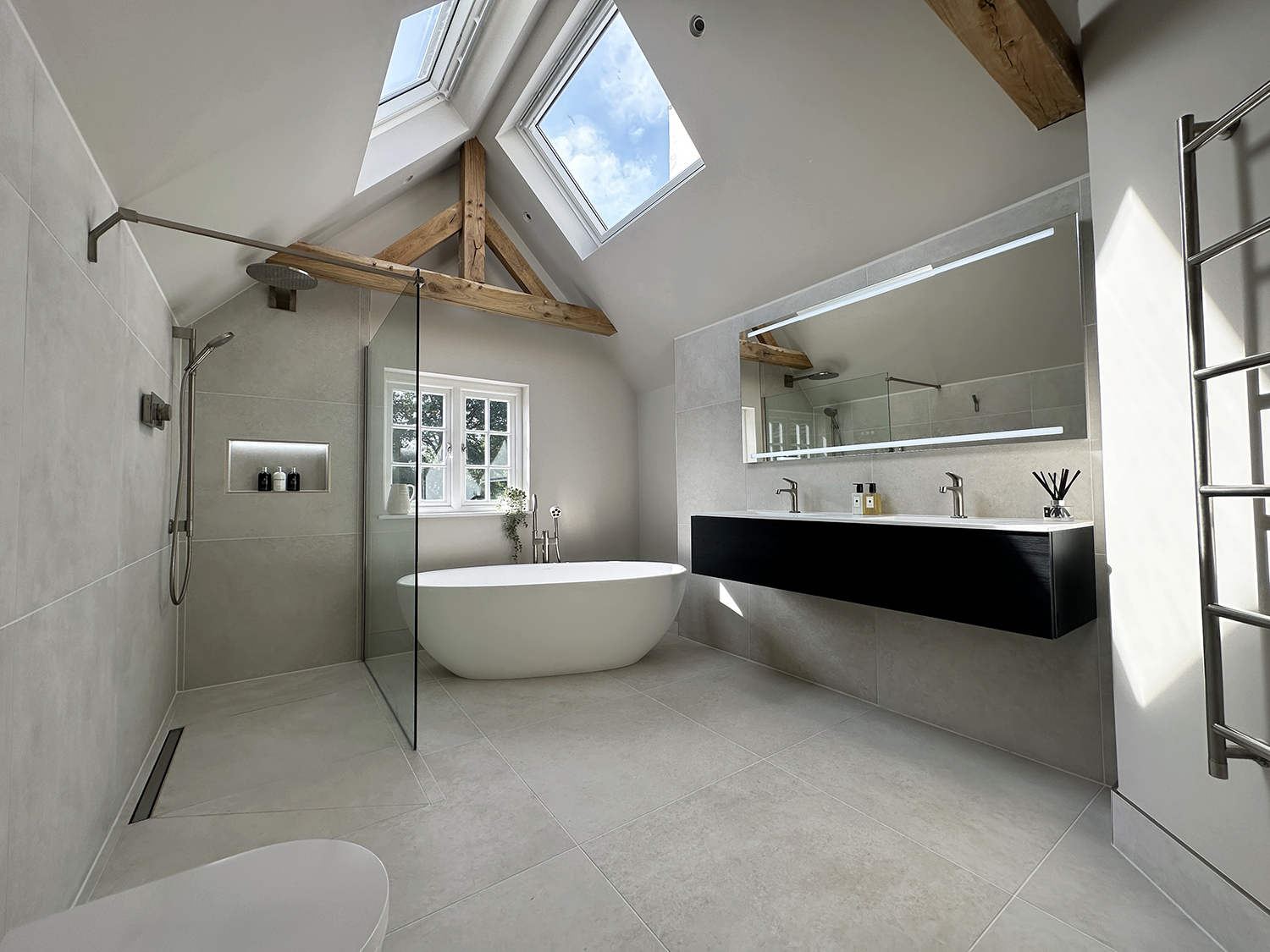
Moving plumbing is more involved than swapping out a basin, but it frequently makes the single biggest difference to how a bathroom feels and functions. Shifting a toilet to a less prominent position, repositioning a shower to make better use of ceiling height, or flipping the layout entirely to create a sensible flow can change a mediocre bathroom into one that genuinely works.
Before committing to any design, ask yourself: if you were starting with a blank box, where would everything go? That answer is a useful starting point.
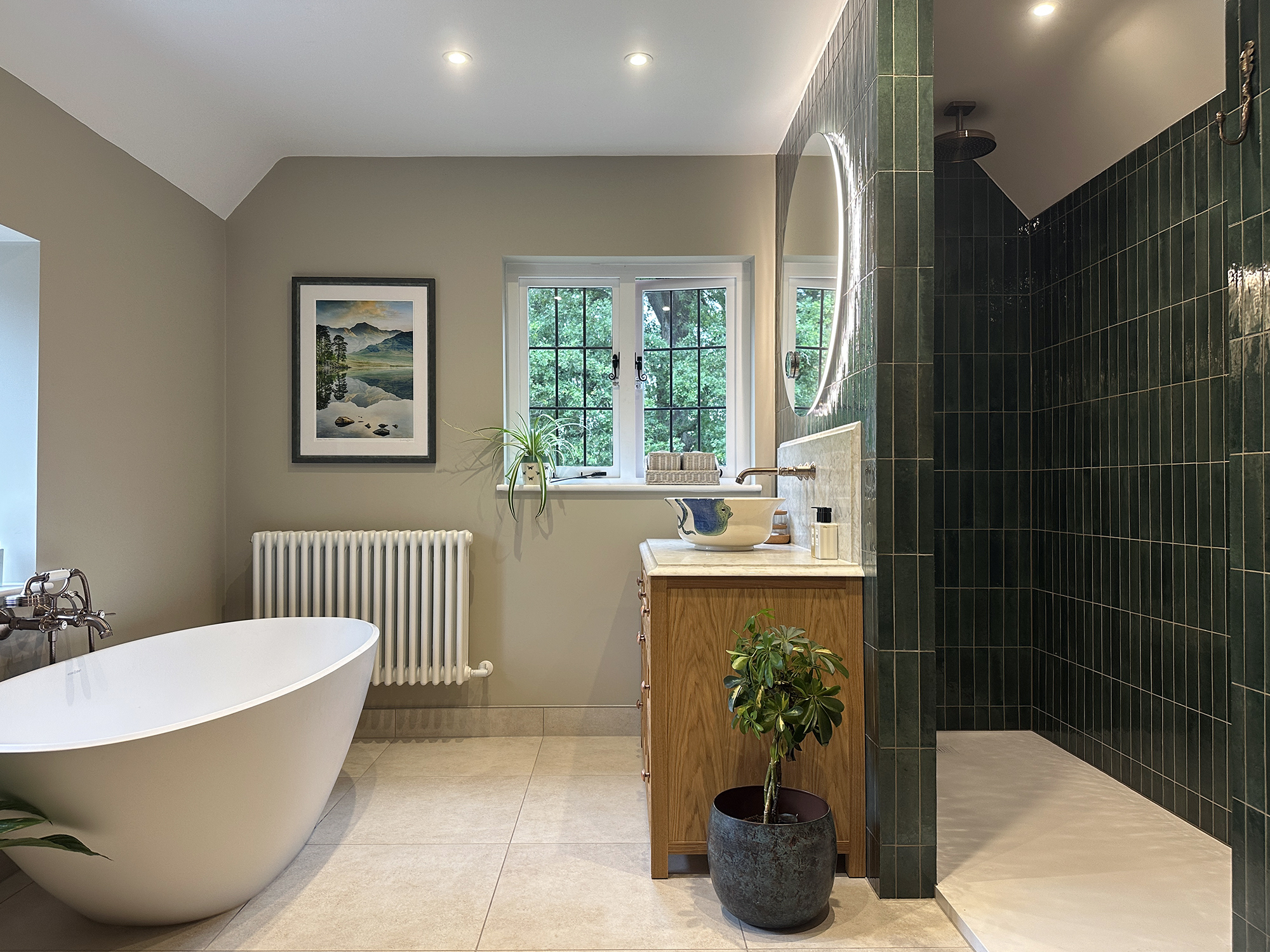
Storage That Works With the Room
Every bathroom has its oddities; the alcove that nobody knows what to do with, the wall that’s fractionally too narrow for a standard unit. Even a perfectly square room is unlikely to snugly fit standard unit measurements. In a bespoke bathroom, these become opportunities rather than problems.
Recessed shelving built into a wall takes up no floor space and looks considered rather than an afterthought. A run of cabinetry that follows a sloped ceiling can hold far more than a freestanding alternative. A floating vanity with deep drawers gives you practical, accessible storage space that you’ll actually use.
Plentiful storage keeps surfaces clear in the long run, which keeps a bathroom feeling calm. Nobody wants to start their day rummaging behind three bottles of conditioner.
Colours That Last Long Term
Colour is one of the most personal elements of any bathroom, and one of the easiest to regret. The question worth asking isn’t “is this on trend?” but “will I still like this in ten years?”
Some broad principles that hold up:
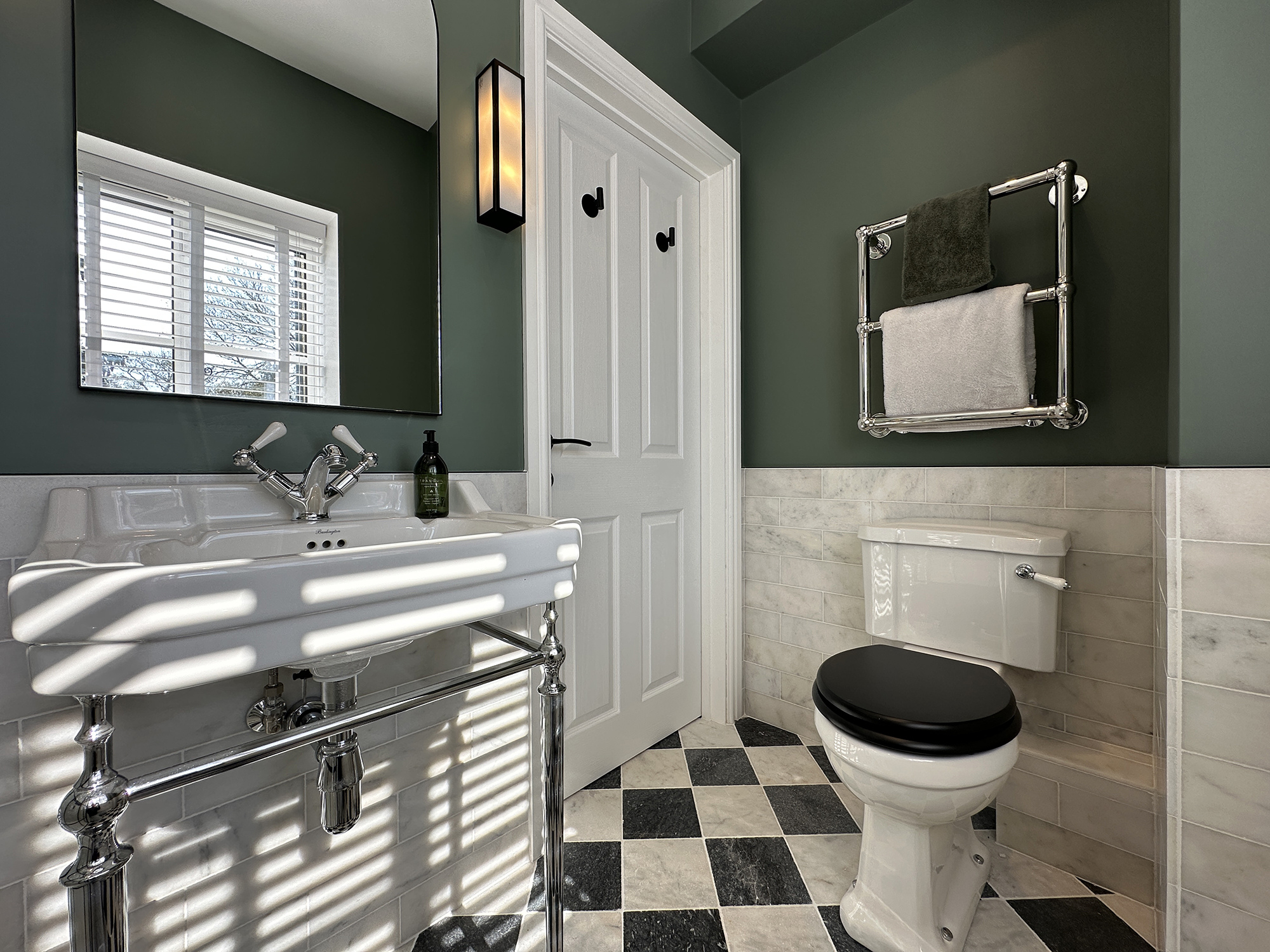
- Neutral foundations (stone, warm white, soft grey) give you flexibility to layer bolder choices in tiles, accessories, or cabinetry without the whole room feeling stuck in a particular era.
- Deep, saturated colours on a feature wall or in a recessed area can be striking without committing the entire room.
- Matching grout to tile colour makes a tiled surface one continuous plane, which tends to age better than contrasting grout that dates more quickly.
If you’re uncertain, bring samples into the actual room and live with them for a few days across different light conditions before deciding.
Furniture You’ll Love to Use
The furniture you use every day is worth spending time planning. A large rainfall shower, a double or trough basin for a shared bathroom, a freestanding bath that’s deep enough to feel luxurious are the things that make the difference. Have a think about whether you actually use both a shower and a bath or if you’d rather dedicate the space to just having an extra large walk in shower.
Here’s a useful snapshot for planning your fixture priorities:
| Furniture | What to prioritise |
| Shower | Flow rate, head size, ease of temperature control |
| Basin | Single vs double based on how many people share the space |
| Bath | Internal depth and length for practical comfort |
| Taps & hardware | Finish durability, especially in hard water areas |
| Toilet | Flush efficiency, seat quality, wall-hung vs floor-mounted for cleaning ease |
Planning Space and Flow
A bathroom used by more than one person benefits enormously from thinking about flow. Can two people use the space at the same time without constantly getting in each other’s way? Is there enough mirror and basin space to make a weekday morning run smoothly?
Separating the wet zone (shower, bath) from the dry zone (basin, storage, mirror) goes a long way here. The aim is to avoid clashing as people move about the space, and where possible, design areas to enable multiple people to use it.
Lighting for Every Time of Day
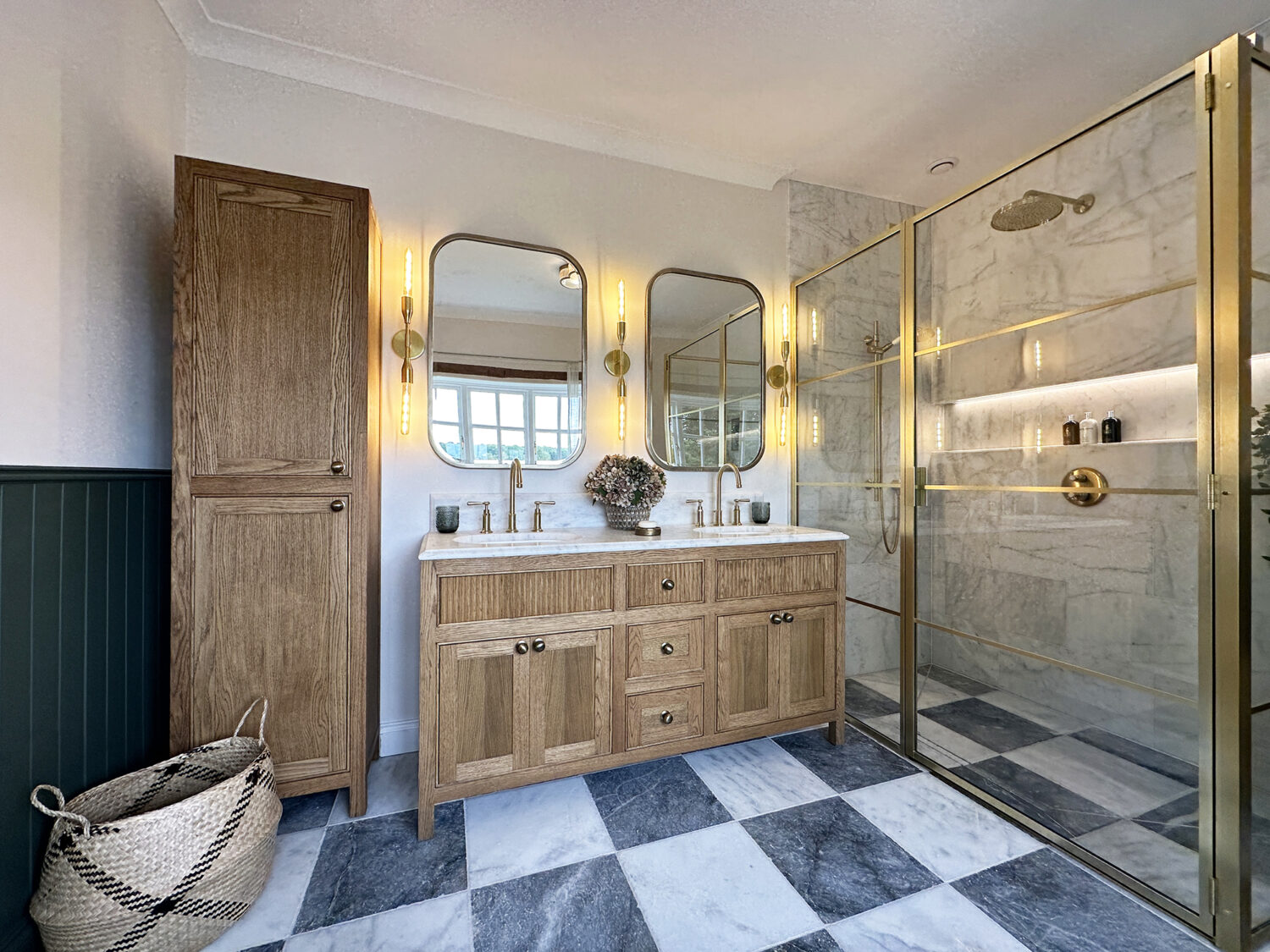
Bathroom lighting has one job in the morning (clear, practical, flattering at the mirror) and quite a different one in the evening (calm, warm, low enough to actually help you wind down). A well designed lighting scheme allows for both.
The approach we use at Stone & Chrome builds lighting in layers: ambient light for general illumination, task lighting around the mirror and shower areas, and accent lighting for atmosphere. Dimmers are a straightforward addition that make a significant difference. We’d also advise specifying warm white LEDs rather than the colder, bluer tones that can make a bathroom feel clinical.
One of our signature features is LED-lit recessed shelving. These illuminated alcoves serve triple duty: they provide soft accent lighting, display space, and practical storage, all without taking up a single square centimetre of floor space.
Statement Features Worth Having
A bespoke bathroom usually has one or two features that are genuinely memorable. These don’t need to be expensive to be effective:
- Patterned or hand-made tiles used selectively on a feature wall or splashback
- Wall art or a framed mirror that elevates the bathroom from a utility space to an area for living
- LED recessed shelving (as we’ve described above) for a feature that’s practical and visually striking
- An unusual basin or tap finish, like brushed brass or matte black, that gives the space a distinct character
The principle is the same whether you’re working with a modest budget or a generous one: choose one or two things to do well, rather than spreading the investment thinly across everything.
To benefit from our bespoke design and installation expertise for your bathroom, just pop along to the Stone & Chrome showroom, or get in touch.
Frequently Asked Questions
How much does a bespoke bathroom cost in Surrey or London?
There’s no single figure, because “bespoke” can mean different things at different budgets. A professionally designed and installed bespoke bathroom with Stone & Chrome typically starts from around £15,000 but depends on the size of the space, the extent of any plumbing work, and the specification of fixtures and finishes.
Do I need to move plumbing to get a bespoke bathroom?
Not always, but sometimes it makes a significant difference. We assess every project individually. If moving a single pipe would meaningfully improve the layout, we’ll tell you. If the existing positions work well, we won’t move things for the sake of it.
How long does a bespoke bathroom installation take?
A full bathroom refit with Stone & Chrome typically takes between two and four weeks, depending on the complexity of the work. We plan installations carefully to minimise disruption, which matters quite a lot when it’s the only bathroom in the house.