
Quick takeaway
No, brushed brass and brushed bronze are different finishes. Brushed brass is a soft golden tone with a satin sheen; brushed bronze is a deeper brown with more visual weight. On bathroom taps and showers, both names usually describe the colour of the finish, as most brassware has a brass body with the colour applied on top. Brushed brass suits lighter rooms and pairs with white, green, navy and marble. Brushed bronze suits larger, earthier schemes with stone, timber and darker tiles.
Table of contents
What’s the difference between brushed brass and brushed bronze?
Is brushed bronze nicer than brushed brass?
What bathroom colours go with brushed brass?
What bathroom colours go with brushed bronze?
Can you mix brushed brass and brushed bronze in one bathroom?
How do you look after brushed brass and brushed bronze?
Where can you get a brushed bronze bathroom designed near you?
Frequently asked questions
Warmer brushed metallics have been on the up in bathroom trends over the last couple of years. Where once chrome was the default choice, we now find more people exploring brushed brass and brushed bronze. If your tastes are following these lines, at some point in your bathroom redesign you’ll need to decide between the two. On a product page they can look really similar, but quite different in situ. Especially when you’re trying to keep consistency across your finishes.
We’ve been designing and installing bespoke bathrooms across Surrey, Berkshire, Hampshire and London since 2007, and have seen this trend grow in our design consultations. Below, we explain how the two differ, which colours suit each, and how to choose for your room.
What’s the difference between brushed brass and brushed bronze?
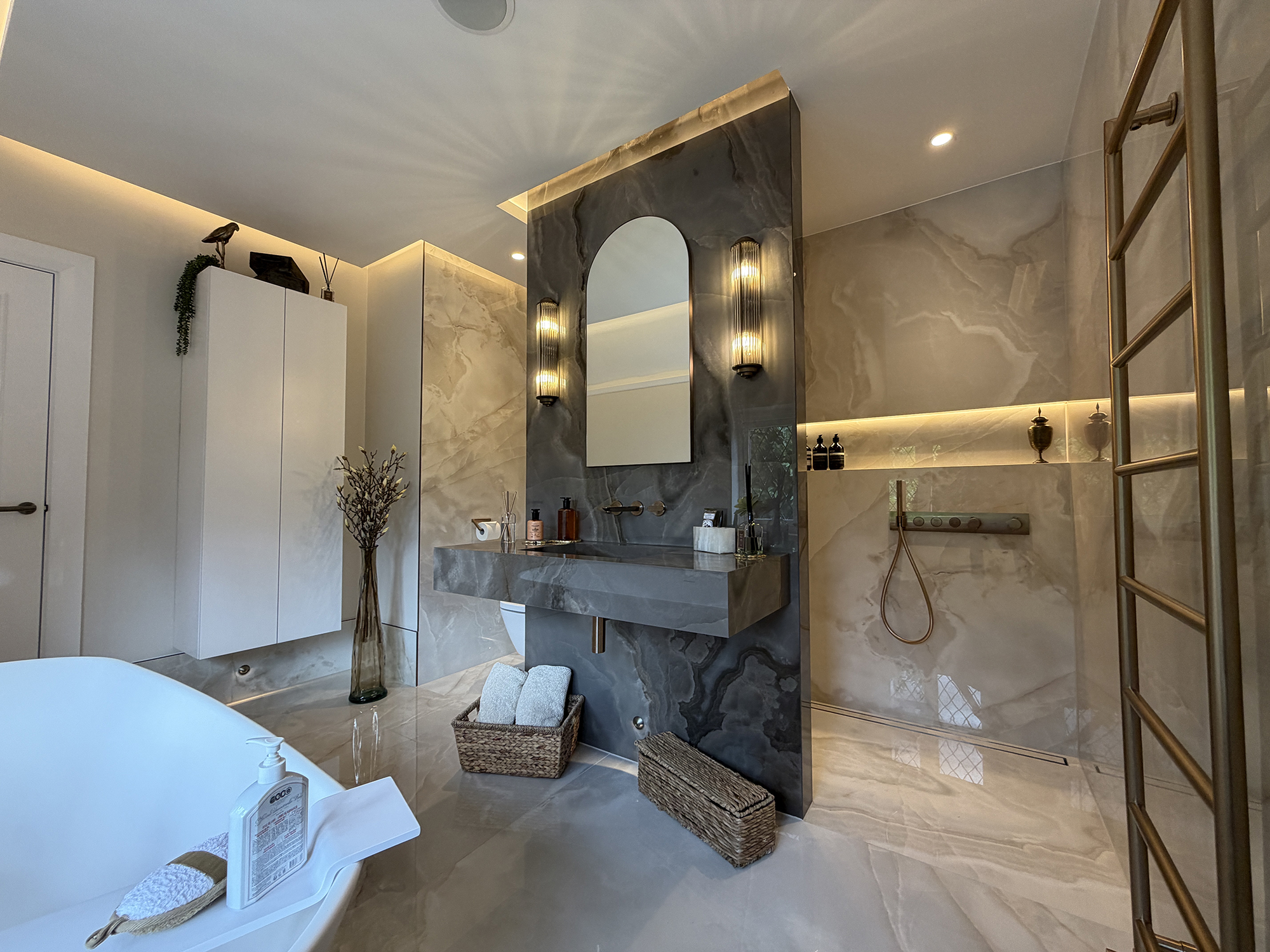
Both belong to the same warm metallic family, but they look quite different once installed. Brushed brass has a pale to mid gold tone, softened by the brushed texture. Brushed bronze is darker, with brown undertones ranging from coffee to dark chocolate depending on the manufacturer.
Tones vary between brands, so choose your taps, shower and accessories from one collection.
| Brushed brass | Brushed bronze | |
|---|---|---|
| Colour | Soft, pale to mid gold | Deep brown with warm undertones |
| Effect on the room | Lifts and brightens | Adds depth and definition |
| Room size | Works in small and large bathrooms | Happiest in larger or well lit rooms |
| Styles | Art Deco, contemporary, Japandi, period | Heritage, spa-inspired, industrial, rustic |
| Pairs with | White, sage, navy, marble, pale oak | Travertine, walnut, terracotta, charcoal, olive |
Is brushed bronze nicer than brushed brass?
Neither finish is better; it depends on the room and the atmosphere you want. Brushed brass is the more versatile. It brightens a scheme, suits period and contemporary bathrooms, and doesn’t overpower a small space.
Brushed bronze has more depth. It suits a calm, earthy bathroom and softens clean-lined taps so they feel less clinical. Because it absorbs more light, it can feel heavy in a small or north facing room, so we tend to suggest it where there’s good daylight or pale stone to balance it.
What bathroom colours go with brushed brass?
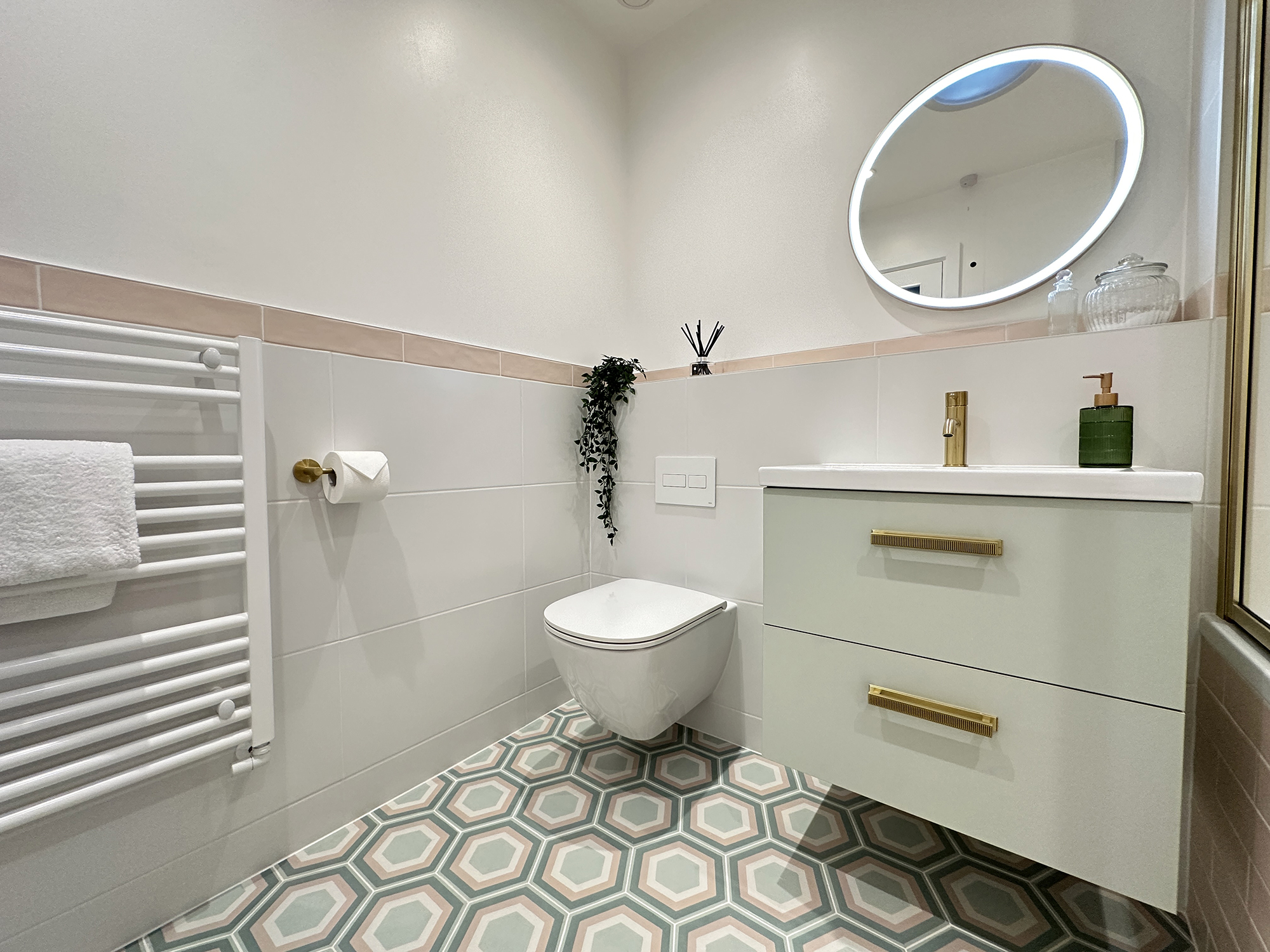
Brushed brass is easy to pair. These combinations work well:
- Warm white walls, where brass adds warmth without dominating
- Sage and olive greens, which bring out its golden tone
- Navy and deep blue tiles, for a rich contrast
- White or grey marble, especially with gold veining (our guide to marble or porcelain for a bespoke bathroom compares the two)
- Pale oak vanities and other light timber
- Blush pink and terracotta, for a softer Art Deco feel
Brass also suits a Japandi bathroom, balancing pale wood and plaster tones. Against very cool blue-greys it can look slightly yellow.
What bathroom colours go with brushed bronze?
Brushed bronze looks best alongside natural, earthy materials:
- Travertine, limestone and warm-toned stone
- Walnut or dark oak furniture
- Charcoal, slate or black tiles, for a moody spa feel
- Terracotta, rust and deep olive
- Cream or stone-coloured microcement, for a soft, joint-free backdrop
In a smaller room, balance bronze with lighter walls and floors. Fittings with wide, flat surfaces in bronze give a really striking, modern look.

Can you mix brushed brass and brushed bronze in one bathroom?
You can, though the two are close enough in tone that side by side they may look mismatched. Mixed metals work best with clear contrast, such as brushed bronze with matt black, or brushed brass with brushed nickel.
Keep one finish dominant across the taps and shower, and repeat the second at least twice, perhaps on a mirror frame and towel rail, so it looks intentional.
Lighting changes how both finishes appear. Warm white light brings out brushed texture, which is why our signature LED-lit recessed shelving, set into a shower wall or beside the bath, suits warm metals so well. See our bathroom lighting ideas with wow factor for more.
How do you look after brushed brass and brushed bronze?
Both brushed finishes hide fingerprints and water marks better than polished ones, and share the same care routine:
- Wipe with a soft, damp cloth, then dry after use
- Use mild soapy water and avoid bleach, limescale removers, acidic cleaners and scouring pads
- Rinse away toothpaste and skincare products, which can mark the surface over time
- Dry the fittings regularly in hard water areas, which cover much of Surrey, Berkshire and London
PVD-coated finishes are made to hold their colour, while unlacquered solid brass or bronze develops a patina, so check which you’re buying.
Where can you get a brushed bronze bathroom designed near you?
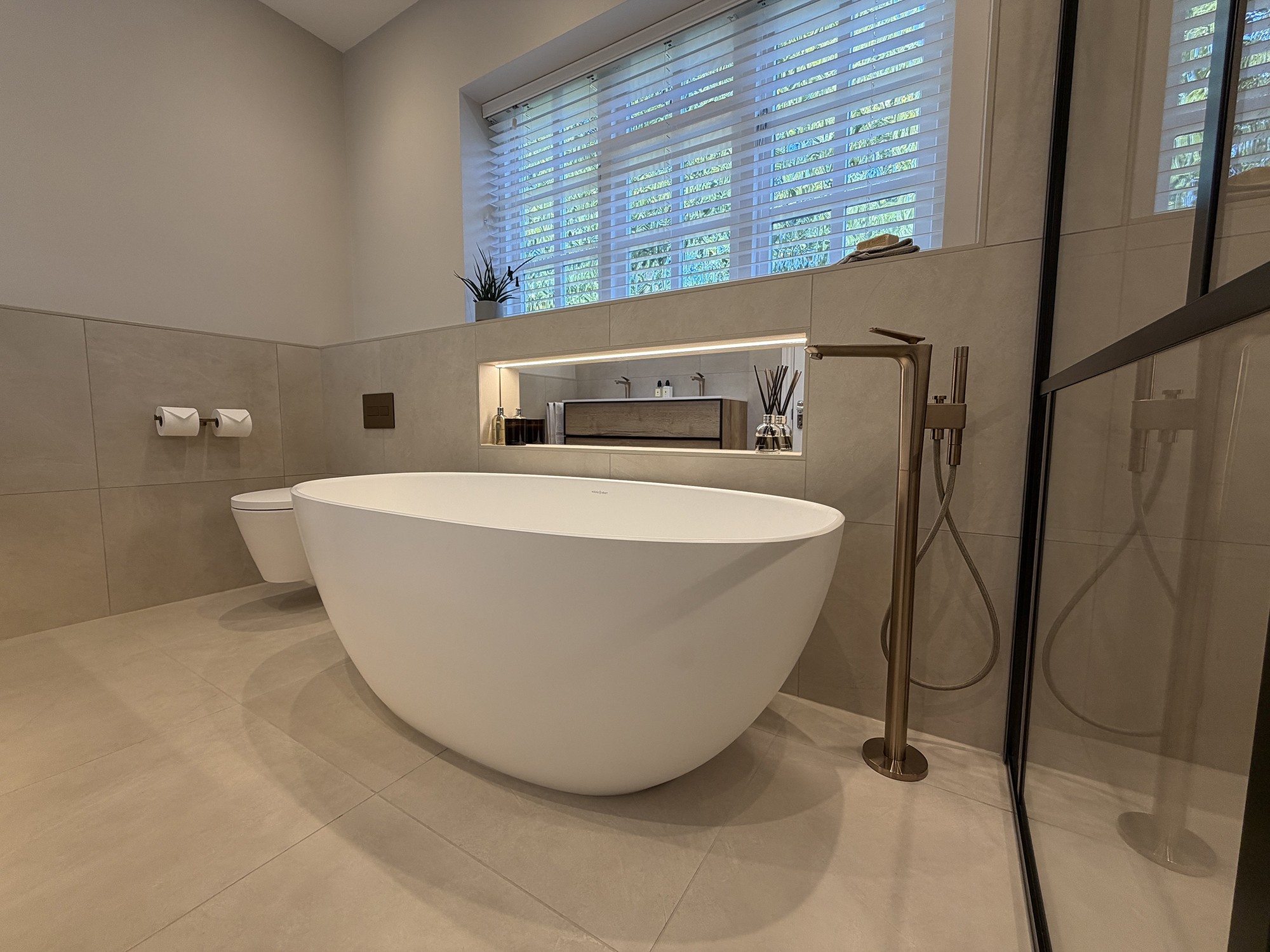
If you live in Surrey, Berkshire, Hampshire or London, we design and install complete bespoke bathrooms in brushed bronze, brushed brass and other finishes. Metal tones look different on screen, so at our Camberley showroom you can hold samples against tiles and stone. Here’s why visiting a bathroom showroom matters before you commit.
Brushed brass is lighter and more adaptable, while brushed bronze is deeper and suits earthier, well lit rooms. The right choice comes down to your room size, light and surrounding materials.
If you’d like help deciding, get in touch or visit our showroom to compare both finishes side by side with the tiles and stone you have in mind.
Frequently asked questions
Does brushed brass tarnish?
PVD-coated brushed brass resists tarnishing with normal cleaning. Unlacquered solid brass darkens over time, developing a patina.
Is brushed bronze the same as oil-rubbed bronze?
They’re different finishes. Oil-rubbed bronze is a much darker, almost black-brown finish, often with copper tones showing through, while brushed bronze is lighter with an even satin texture.
Can you use brushed brass in a small bathroom?
Yes. Brushed brass reflects more light than bronze, so it adds warmth to a small bathroom without making it feel darker.