
Quick Takeaway
Microcement is a thin, cement-based decorative coating applied in layers over existing surfaces to create a seamless, hard-wearing finish. In bathrooms, it works beautifully on walls, floors, shower areas, basins and even baths, with no grout lines and a continuous look across the whole room. The finish can be tweaked from rustic and textured through to smooth and indulgent, which makes it brilliantly versatile. Getting the result you want depends almost entirely on the skill of the designer and applicator, so it pays to work with an experienced bespoke bathroom team.
Table of Contents
What is microcement?
How is microcement applied in a bathroom?
Microcement design styles for your bathroom
Pros and cons at a glance
Why getting the right team matters
FAQs
What is microcement?
Microcement is a decorative coating made from cement, polymers, mineral pigments and resins. It is applied in very fine layers, usually only 2 to 3mm thick in total, which means it can be laid directly over existing tiles, plaster, concrete or even old bathroom suites without ripping everything out first. Once sealed, it is water resistant, durable, and looks great not only for walls and floors, but vanity surrounds and counter tops too.
The reason it has become such a popular finish over the last couple of years is partly aesthetic and partly practical. Visually, it gives you a continuous, uninterrupted surface with no grout lines to clean, scrub or get irritated by. Practically, it is flexible enough to move slightly with the building, which helps it resist cracking over time.
How is microcement applied in a bathroom?
You might assume microcement is just smeared on and left to dry. We wish it were that simple. The process is focussed and skilled work, and a proper installation in your bathroom should follow a careful sequence:
Surface preparation
Our experts will first clean, repair, prime, and waterproof the existing surfaces. It’s important to deal with any movement, damp or instability first, because microcement is only ever as good as what sits underneath it.
Reinforcement layer
They embed a fibreglass mesh into a base coat to give the system strength and prevent hairline cracking, particularly across joints and corners.
Build up coats
They will then layer two or more layers of microcement using a trowel, with each one sanded back to refine the texture and depth of colour.
Sealing
Last comes the sealing, with multiple coats of a specialist waterproof sealer. This is the step that turns a decorative finish into a fully bespoke, luxury aesthetic.
The whole process usually takes around a week to ten days, depending on the size of the room and how many decorative effects you want layered in. It is not a job to rush, and it is absolutely not a DIY weekend project unless you fancy redoing the whole thing six months later.
Microcement design styles for your bathroom
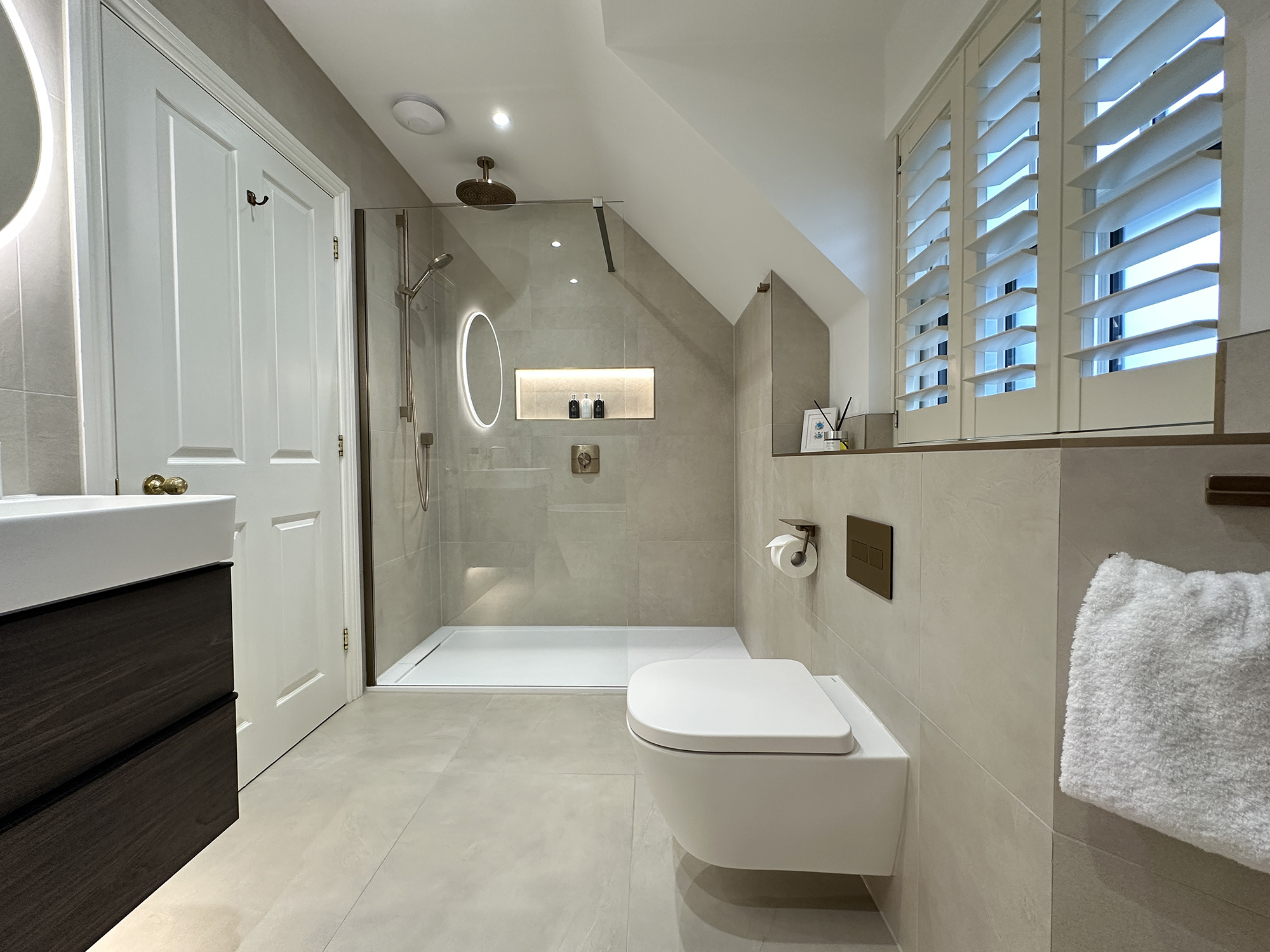
One of the loveliest things about microcement is how differently it can manifest into styles depending on how it is finished. Using the same material you can create a rustic Mediterranean feel or a sleek, hotel spa look, all down to colour, technique and the fittings you pair it with.
Rustic and textured
Warm earthy tones, slightly uneven trowel marks and a more matte sealer create a relaxed, organic feel. This style works beautifully in country homes and period properties, where you want something modern but not jarringly contemporary. A microcement finish turns a recessed shelf into an architectural feature. Pair it with timber vanities, brushed brass taps and softer lighting to keep the warmth.
Industrial and architectural
Stick to cooler greys, smoother finishes and a slightly more uniform colour to give microcement an architectural, concrete-like presence. This suits new builds, loft conversions and city apartments very well, particularly when paired with crittall-style shower screens and matte black brassware. If you are leaning this way, our bathroom lighting ideas with wow factor are worth a read, because the right lighting completely changes how a microcement surface looks.
Indulgent spa
For a softer, more luxurious feel, microcement can be finished in pale, putty-like tones with a silky sheen and used to wrap an entire wet area, including built-in benches and niches. The seamless surface feels indulgent underfoot and is a brilliant fit for a bespoke or luxury bathroom. It also lends itself very well to a wet room layout, where the lack of grout lines elevates the space to a luxury retreat.
Microcement is also a clever player in high-low bathroom design, where you mix more affordable elements with a few investment pieces. A microcement floor can discretely elevate a room without competing for attention with your statement bath or vanity.
Pros and cons at a glance
| Consideration | What it means for your bathroom |
| Seamless finish | No grout lines, no awkward tile cuts, easier to keep clean |
| Works over existing surfaces | Often no need for full strip-out, which can save time and mess |
| Design flexibility | Wide range of colours, textures and sheens to suit your style |
| Durability | Hard wearing and water resistant when correctly sealed |
| Skill dependent | The finish is only as good as the person applying it |
| Initial cost | Usually higher per square metre than standard tiling |
| Repairs | Patch repairs are possible but require a skilled hand to blend |
Why getting the right team matters
Here’s the real key to getting the look right with microcement. It appears effortless when it is done well, but is pretty unforgiving when it is not. When rushed or inexperienced, you’ll find streaks, uneven colour, poor sealing around shower trays and lifting at the edges. So while this finish is a stunning part of a bespoke bathroom, it needs professionals. Not just in installation but in design.
This is where working with a proper design-led team pays off. At Stone & Chrome, we’ve been designing bespoke bathrooms from our Camberley showroom since 2007. We specify microcement where it adds to your room, and achieves the right aesthetic. Then we partner with trusted independent installers who know their way around specialist finishes like microcement. We will help you choose the right colour and texture for your space, plan the layout so the effect actually works in your favour, and coordinate the installation so the prep, application and sealing are done in the right order by the right hands.
If you’re weighing up microcement against more traditional options and would rather chat it through in person, you’re very welcome to come and visit the showroom.
Frequently asked Questions
Can microcement really be used in a shower or wet room?
Yes, provided the system is properly specified and sealed. The waterproofing layer underneath the decorative coats is what makes it shower-safe, so it is essential that this is installed correctly. Microcement is a popular choice for wet rooms specifically because the seamless finish suits the open, walk-in design.
How do I clean and look after a microcement bathroom?
Day to day, warm water and a pH-neutral cleaner are all you need. Avoid bleach, abrasive scourers and harsh limescale removers, as these can dull the sealer over time. Resealing every few years, depending on use, will keep everything looking fresh and properly protected.
Is microcement more expensive than tiling?
In most cases, the upfront cost per square metre is higher than standard tiling because of the labour and skill involved. However, it can save money on preparation if it is going over existing surfaces, and the long lifespan and seamless finish often justify the investment. We will always be transparent about costs from the start so you can make a properly informed decision.