
Quick takeaway
For most bathroom refits in Surrey, Berkshire, Hampshire and London, we’d suggest putting around 25 to 35% of your total budget towards bespoke handmade furniture. That gives you room to invest in the pieces that shape the whole room (vanity units, bath surrounds, LED lit recessed shelving) while balancing your spend on tiles, sanitaryware and finishes using the high/low approach.
Table of Contents
Working out where the money goes
What makes handmade furniture worth it
The high/low principle in bathroom design
Suggested budget split
Where LED lit recessed shelving fits in
Where to save without regretting it later
Sticking to a budget plan
FAQs
Working out where the money goes
Deciding where to spend and where to save on a bathroom refit is one of the trickier parts of the whole project. You want quality that lasts, without blowing a big chunk of budget into just one part of the room.
At Stone & Chrome, we’ve designed and fitted bathrooms across Surrey, Berkshire, Hampshire and London for years, and we’ve helped plenty of clients through this exact process.
Below, we’ll cover how much of your refit typically goes on handmade furniture, how the high/low principle plays out in bathroom design, and where your money works hardest.
What makes handmade furniture worth it
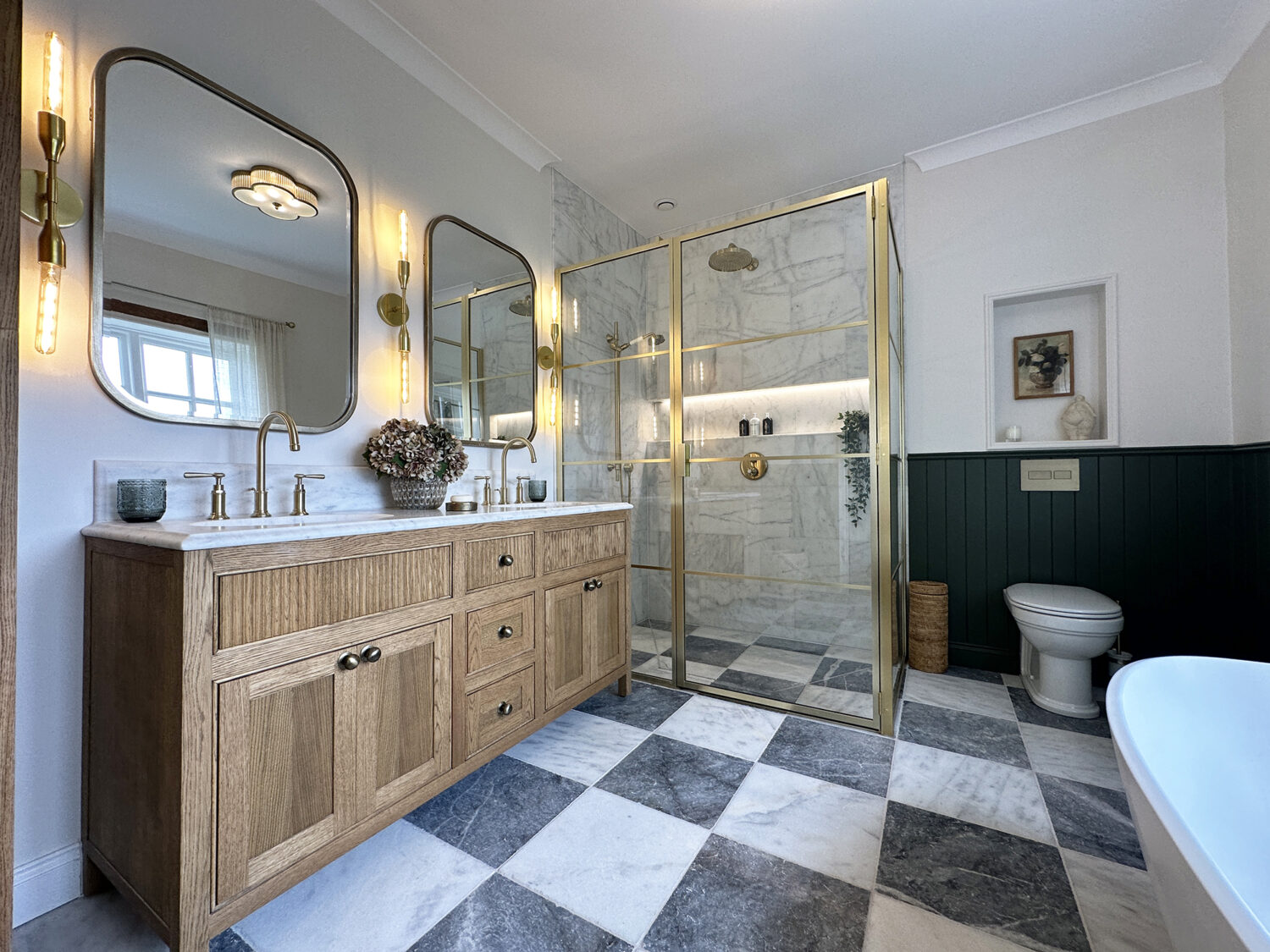
Handmade bathroom furniture doesn’t age at the same rate as flat-pack. It’s built to your room’s precise measurements, from materials that fit the environment, and it sits properly against your walls without the gaps that serve little purpose but to accumulate grime.
The advantages stack up quickly:
- Made to your exact dimensions, so awkward corners, sloped ceilings and odd alcoves stop being a problem
- Built from moisture resistant hardwoods with finishes designed for daily use
- Fitted with soft-close hinges, proper drawer runners, and hardware that won’t rust after two years
- Can house integrated features like sub-storage and LED lit recessed shelving
- Holds its value if you sell, because this level of quality caries timeless appeal
You can read more about the distinction in our post on whether a bespoke bathroom is the same as a luxury bathroom.
The high/low principle in bathroom design
If you’ve read our piece on what high/low is in bathroom design and how to do it right, the idea will already be familiar. High/low simply means putting your budget behind the pieces that carry the room, and saving on the ones that don’t need to work as hard.
In a bathroom, the “high” is usually the furniture and the sanitaryware you interact with every day. The vanity, the bath, the shower enclosure. For handmade bathroom furniture, you’ll often find that you end up with more actual storage space as the room is optimised with bespoke fitted items. The “low” is often the accent tiles, the mirror, or the light fittings, where a well-chosen budget option often looks the same as one costing three times as much once it’s in the room.
Suggested budget split
For a typical refit (but by no means a hard and fast rule), here’s a starting point you can adapt to your project:
| Element | Typical share of budget |
| Handmade furniture (vanity, bath surround, recessed shelving) | 25 to 35% |
| Sanitaryware (bath, WC, basin, shower) | 20 to 25% |
| Tiling and flooring | 15 to 20% |
| Fitting and labour | 15 to 20% |
| Lighting, mirrors, brassware, finishing details | 10 to 15% |
These are working numbers, not rules. A smaller cloakroom often tilts heavier on furniture because you’ve got less of everything else. A larger family bathroom or wetroom design may see more spent on tiling and drainage. For a fuller picture, our guide on realistic costs for a bathroom refit in Surrey is worth a read.
Where LED lit recessed shelving fits in
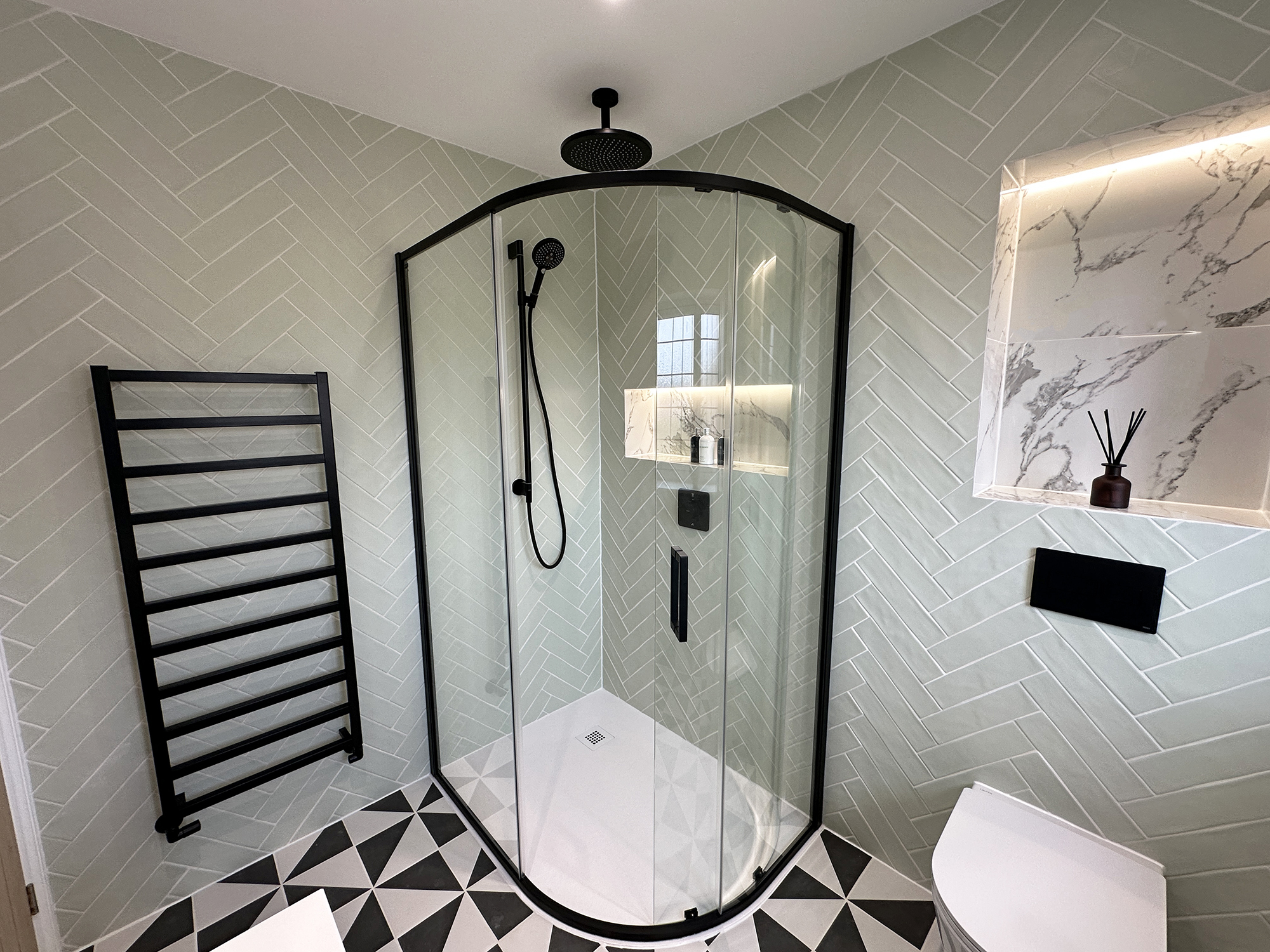
Our signature design feature, LED lit recessed shelving, is a great example of the high/low principle in action. Recessed shelving is built into the wall itself during the fitting stage, so it doesn’t take up floor space, and it turns a purely storage feature into a lit display for candles, plants, or your posh bottles of hair care.
You can position recessed shelving:
- Inside the shower area to hold products at the right height
- Alongside a freestanding bath as an accent feature
- Along a longer wall as a display niche or bookshelf-style feature
Because the shelving comes in as part of the handmade joinery package, it doesn’t land on the “extras” line of your budget. It’s already part of what makes the furniture spend worthwhile.

Where to save without regretting it later
If your budget is stretched, these are the areas we’d usually suggest saving on:
- Mirrors and light fittings, which can be swapped out later for very little effort
- Accent tiles and mosaic detailing, where a small area of premium tile against plain surrounds reads as luxury for a fraction of the cost
- Towel rails and smaller brassware, which can be upgraded when the budget allows
What we’d avoid saving on: taps, shower valves, and the vanity itself. These are the parts you touch every day, and cheap versions fail early. Our post on 12 stylish bathroom ideas that will transform your space has more on making a smaller spend look considered.
Sticking to a budget plan
The best way to protect your spend is to plan properly before anything gets ordered. That means understanding how to plan a bathroom layout for your space, and where possible, visiting a bathroom showroom so you can see materials and finishes in person. Phone photos have a way of flattening everything into the same beige.
If you’re refitting to add value before a sale, our piece on how bathroom design can improve the value of your home is also worth a look, and our detailed guide to planning for Surrey homes covers space, lighting and style in more depth.
FAQs
Is handmade bathroom furniture always more expensive than off-the-shelf?
Yes, generally. You’re paying for materials, craftsmanship, and a piece built for your exact space. Factor in longevity and the fact that you won’t be replacing it in five years, and the cost per year of use often comes out lower than a mid-range flat-pack alternative.
Can I mix handmade furniture with high street pieces?
Absolutely. That’s exactly what the high/low principle is for. A handmade vanity paired with a high street mirror and mid-range taps can look every bit as considered as a top-to-bottom luxury fitout. The trick is choosing the “low” pieces carefully so they sit comfortably alongside the “high” ones rather than pulling attention away from them.
How long does a handmade bathroom furniture project take?
Lead times vary with complexity and materials, but you’re usually looking at around six to twelve weeks from design sign-off to installation. We walk you through the full timeline at the design consultation stage so there are no surprises further down the line.