
Quick takeaway
Lighting shapes how your bathroom looks and feels more than the tiles or taps ever will. To get a designer bathroom lighting effect without blowing the budget, plan your lighting early, layer three types of light (ambient, task, and accent), and pick one feature that does the heavy lifting. LED recessed shelving, a Stone & Chrome signature, doubles as both storage and statement.
Table of Contents
Why lighting deserves your attention early
How to layer bathroom lighting
LED recessed shelving as a signature feature
Where to spend and where to save
Small touches with big impact
FAQs
When you picture your new bathroom, you’ll probably think about colours, tiles, and bathroom furniture. You’ll imagine relaxing in a freestanding bathtub or starting your day with an invigorating shower. Designer bathroom lighting is likely somewhere near the bottom of your list. It’s a common misconception, and that’s often where a bathroom design falls flat, since lighting changes how colours appear, how textures are perceived, and how you actually use the space.
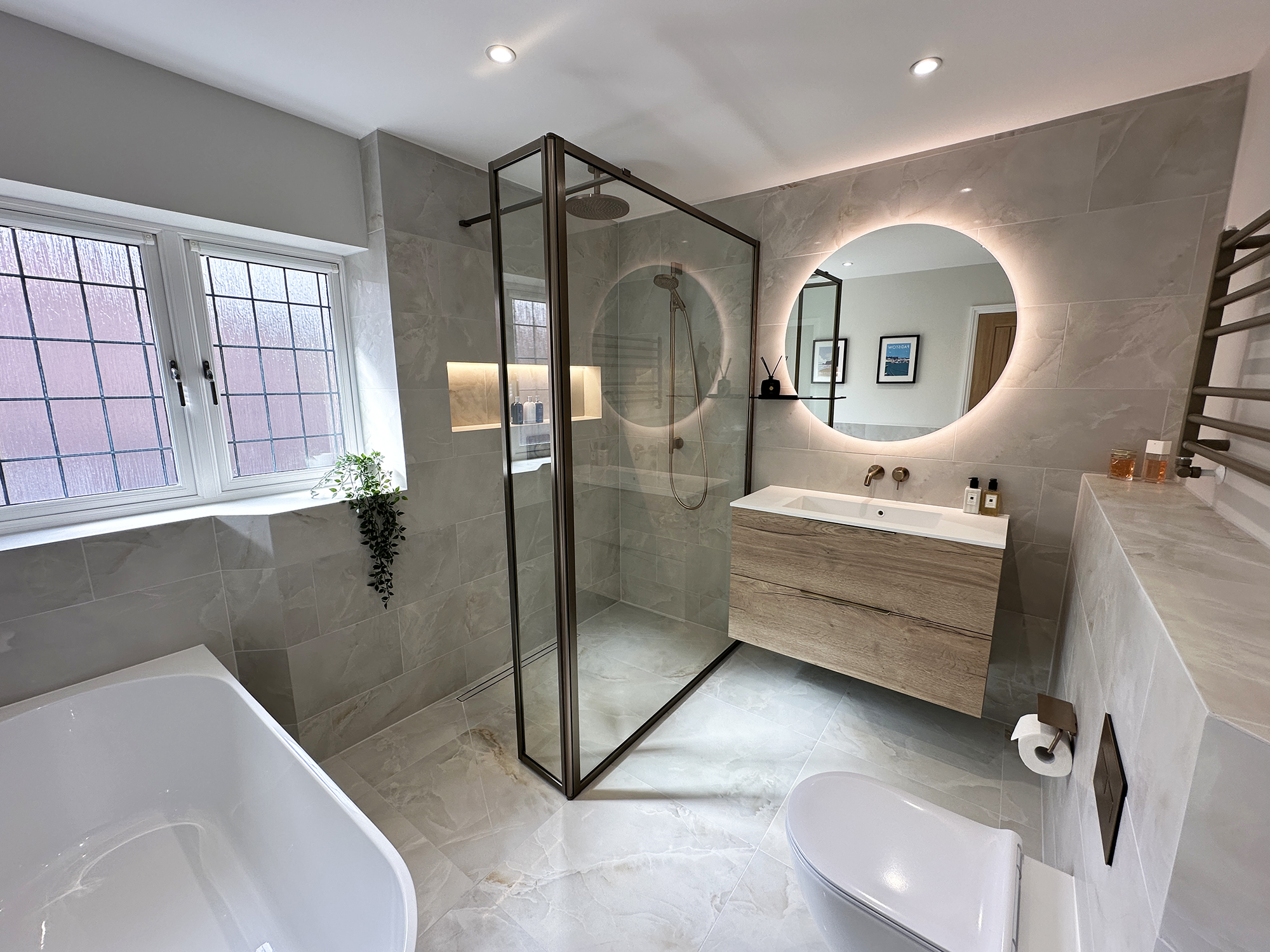
At Stone & Chrome, we’ve spent years designing and installing bespoke bathrooms across Surrey, Berkshire, Hampshire, and London. Lighting sits at the heart of every project we take on, because it’s the difference between a bathroom that looks good on paper and one that feels considered the moment you step in. Our LED recessed shelving has become something of a signature, and it’s a good example of how a designer look doesn’t have to come with a mind blowing price tag.
We want to explain why lighting deserves more of your planning time, how to layer light for depth and function, where to spend and where to save, and how one thought out feature can pull the whole room together.
Why lighting deserves your attention early
Retrofitting light fittings after tiling is finished is one of the fastest ways to add cost to a bathroom project. Recessed spotlights, wall lights, and any electrical work behind mirrors need setting into walls before finishes go on. Leave lighting decisions until later and you’ll either pay extra to undo work or settle for surface-mounted fixtures that don’t quite fit the look you had in mind. Planning your bathroom layout early sets you up to spend more freely on the finishes you can see, rather than the wiring you can’t.
Lighting also changes how your material choices behave. A warm brass tap looks entirely different under a cool 5000K spotlight than it does under a warm 2700K downlight. The same goes for stone, wood, and coloured tiles. When you’re investing in a bespoke bathroom, you want your finishes to look their best in all conditions, from a bleary early morning wash to a candlelit soak.

How to layer bathroom lighting
Designer bathrooms almost always use three types of lighting together. The trick isn’t to spend more on each layer, it’s to plan for all three from the start:
- Ambient lighting sets the general brightness of the room, usually via recessed downlights or a ceiling pendant
- Task lighting focuses on specific jobs, most commonly around the mirror for shaving, applying makeup, or brushing teeth
- Accent lighting adds character and highlights features such as an alcove, freestanding bath, or decorative wall
You don’t need to spend big on every layer. A generous ambient scheme with well placed downlights can be relatively affordable. Task lighting around the mirror is where the money often goes, since backlit or integrated LED mirrors sit at the pricier end. Accent lighting can be the most affordable of the three, and it often delivers the highest visual impact per pound. If you want a deeper look at how designer bathroom lighting shapes a bathroom design, we’ve written more on that separately.
LED recessed shelving as a signature feature
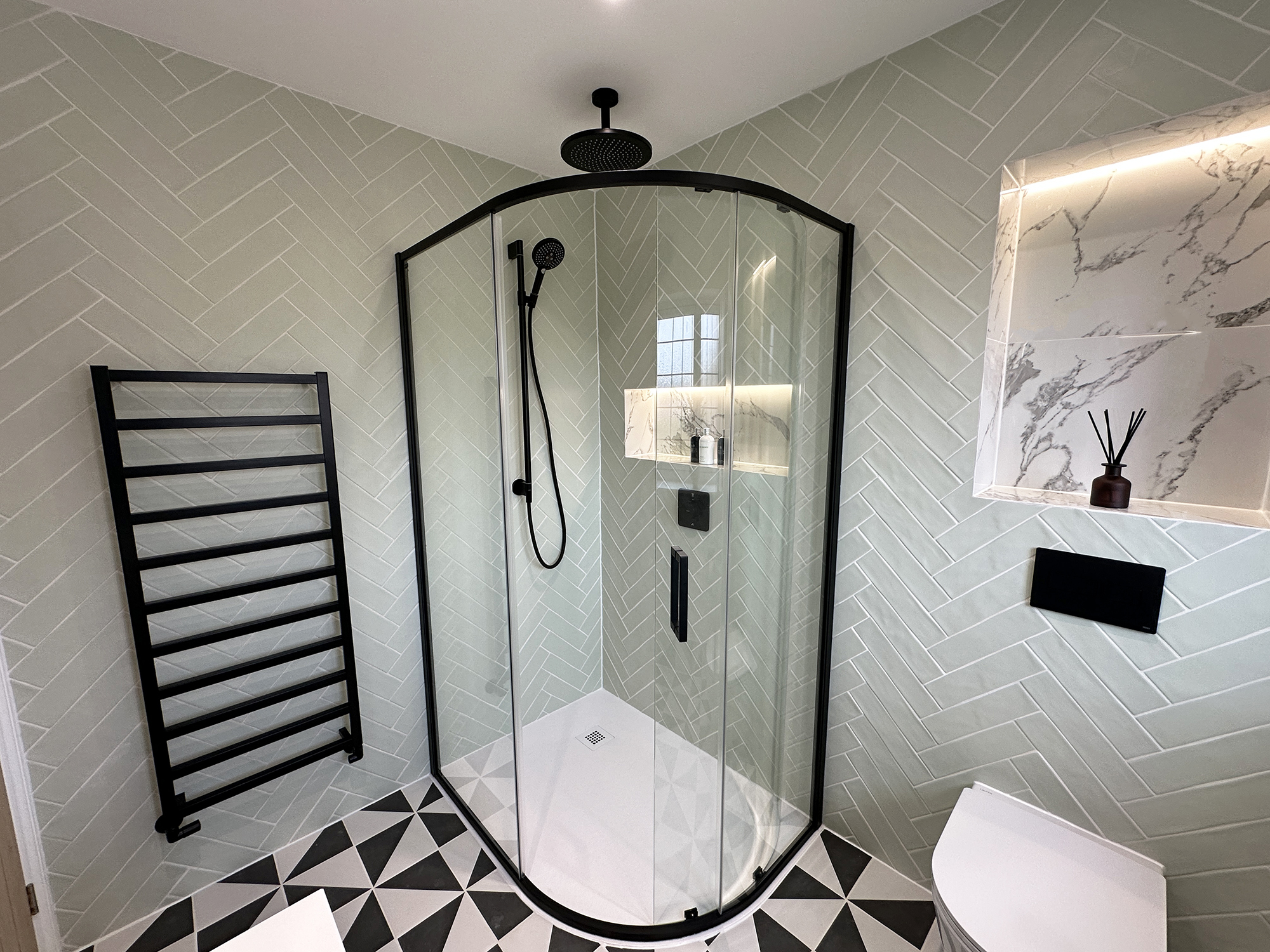
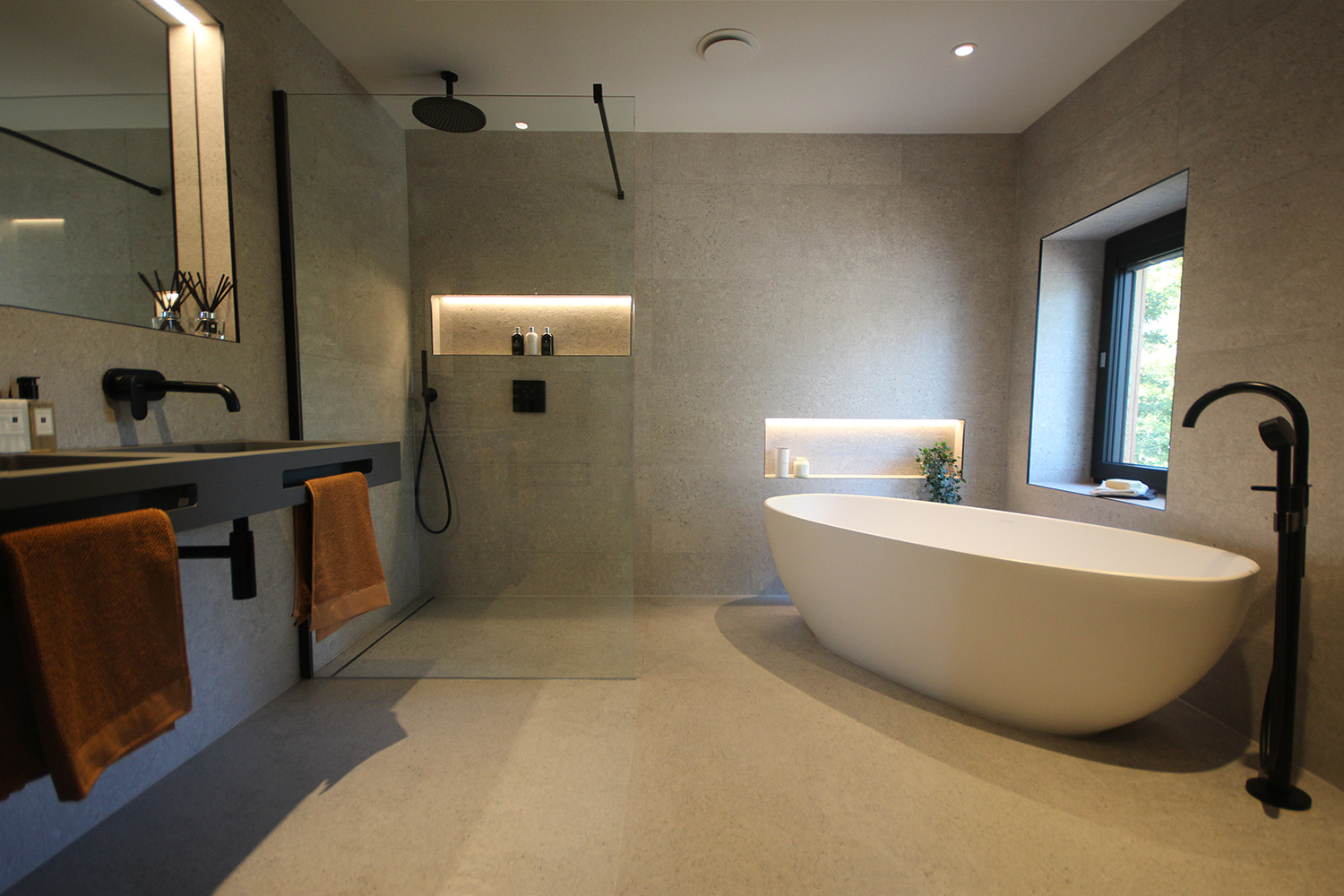
Recessed shelving with integrated LED strip lighting is one of our most requested details, and for good reason. It sits flush within the wall, offers useful storage for shampoo, candles, or plants, and provides soft accent lighting all at once. You can have it running the length of a shower, framing a bathtub, or set into a wider wall as a display niche.
Because the shelving is built into the studwork or plasterboard rather than added on afterwards, it doesn’t eat into floor space or compete visually with other fittings. A warm LED strip washes light across the tiles, picking out the texture of stone or ceramic and giving the room the depth you usually only see in showroom photography. It makes the whole room appear more high end without demanding a designer price tag on every other element of the design.
Where to spend and where to save
Here’s a rough guide to how we approach lighting budgets on a typical Surrey bathroom refit:
| Element | Spend or save | Why |
| Recessed downlights | Save | Reliable brands offer good quality at lower prices |
| Mirror lighting | Spend | You’ll use this every day, and the quality shows |
| Feature pendant or wall light | Spend selectively | One well chosen piece can carry the whole room |
| LED recessed shelving | Spend on design, save long term | The impact comes from placement, and LEDs are ultimately cost effective |
| Dimmers and controls | Spend | Good controls change how the room feels at different times |
Spending well doesn’t mean spending the most on everything. It means choosing where a small increase in budget makes a visible difference to the finish. This is a version of the high / low approach we write about here, applied to lighting rather than materials.
Small touches with big impact
A few smaller decisions can lift a bathroom without adding much to the total spend. Dimmable circuits let you switch between bright and calm without any additional fittings. Warm white LEDs (around 2700K to 3000K) tend to flatter both finishes and skin tones, which your reflection will thank you for on a Monday morning. Motion-sensor plinth lighting under vanity units offers a soft glow without turning on the main lights. None of these push the budget hard, but together they make the space feel properly designed and luxurious to use.
If you’re planning a refit and want to see how designer bathroom lighting looks in situ before committing, visiting a showroom is one of the more useful hours you can spend. We’ll be there to chat through your ideas and help you achieve the right lighting within budget. So get in touch whenever you’re ready.
FAQs
How much should you budget for lighting in a bathroom refit?
As a rough guide, lighting tends to sit at around 5 to 10 percent of your total refit budget, depending on how many feature pieces you include. On a mid-range Surrey bathroom project, that’s often between £500 and £2,000 for fittings, feature lights, and controls. Installation costs sit separately with your electrician.
Can you use LED strip lighting in a shower area?
Yes, provided you use fittings with the correct IP rating for the zone they sit in. LED recessed shelving in showers uses IP65-rated strips housed within a waterproof channel. Your bathroom designer and electrician will confirm the right specification for your layout.
What colour temperature works best for bathrooms?
Warm white, roughly 2700K to 3000K, tends to work well for the main scheme and gives a relaxing feel. Some clients prefer a slightly cooler 3500K around mirrors for clearer task lighting. Mixing temperatures can work well when done deliberately, though we generally recommend keeping the ambient lighting on the warmer side, and changeable hues give you the best of all worlds.