
Quick takeaway
Designing a luxury bathroom in a Surrey period property means working with the character of the building, not against it. Use original features like sash windows, picture rails, and chimney breasts as focal points. Mix traditional materials such as marble, brass, and timber with discreet contemporary fittings like underfloor heating and LED lit recessed shelving. The best results balance heritage detail with everyday comfort, so the room feels in keeping with the home’s history while being lovely to use.
Table of contents
Why period bathrooms need a different approach
Working with original architectural features
Materials that suit a period home
Lighting, layout, LEDs
High / low: where to spend and where to save
Bespoke and luxury: knowing the difference
Practical considerations for older homes
FAQs
Why period bathrooms need a different approach
You probably already know that a period property has its own ideas about what you can and can’t do. Sloping floors, awkward chimney breasts, narrow doorways, and rooms that were never meant to be bathrooms in the first place. It’s part of the charm of living in a home with history, whether that’s in Guildford town or rural Surrey Hills. And it’s also why an off the shelf bathroom design rarely works.
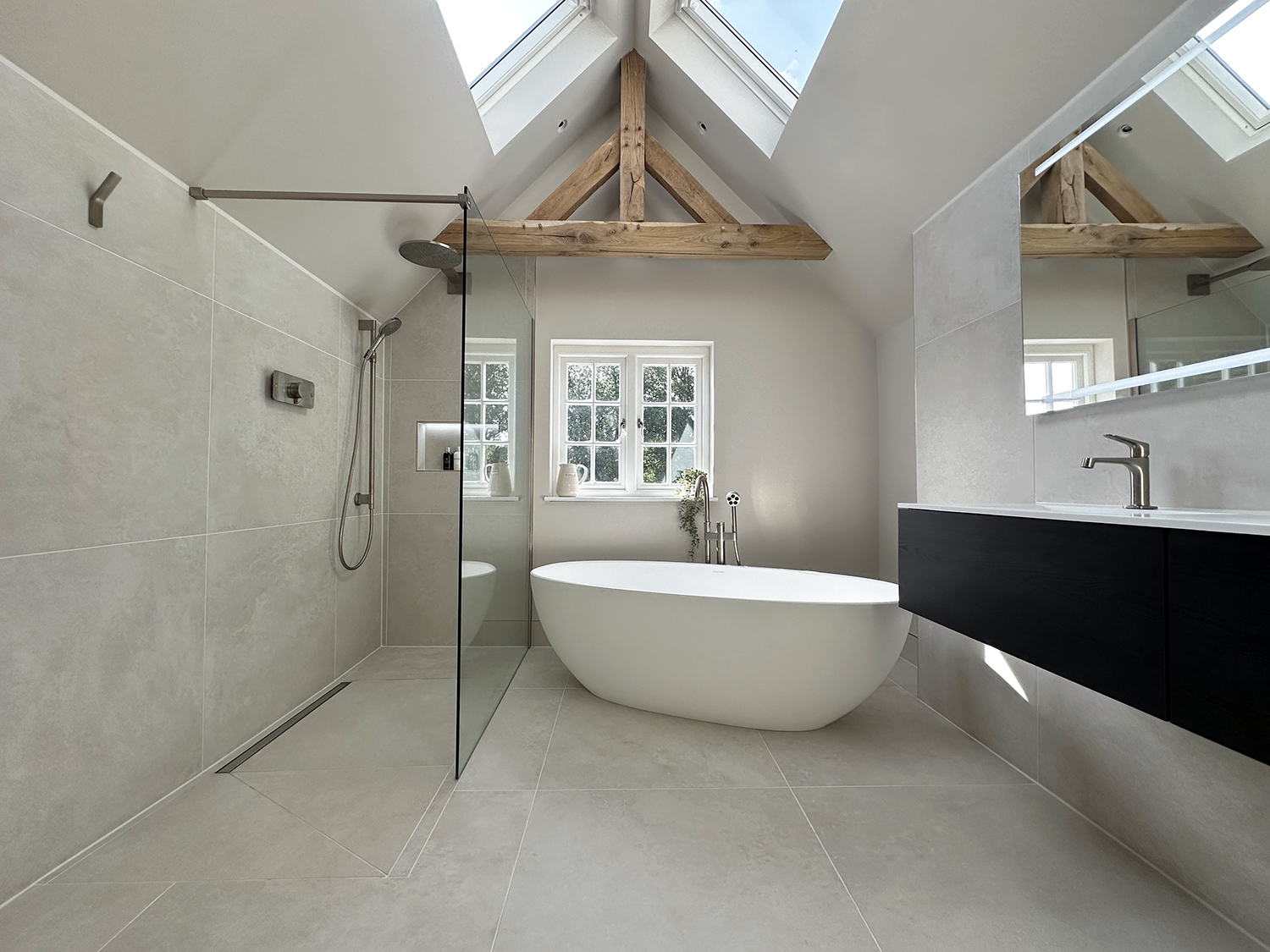
A luxury bathroom in a period home should feel like it has always belonged there. That means resisting the temptation to strip out every quirk in favour of a blank slate, and instead designing around the things that make the room interesting in the first place. Heritage features add value, both to your enjoyment and to the property itself, so they’re worth protecting.
As bespoke bathroom designers working across Surrey, Berkshire, Hampshire, and London, we’ve found that the most successful period bathrooms share a few common traits. They acknowledge the age of the building. They use materials with weight and texture. And they tuck the practical, contemporary bits away so the room never feels like a showroom.
Working with original architectural features
Before you start choosing taps, look up. And down. And into the corners. The features you might think of as obstacles are often the best starting points for your design.
Things worth keeping and celebrating include:
- Original sash windows, which beautifully frame natural light
- Cornicing, picture rails, and ceiling roses that anchor the room in its period
- Chimney breasts and alcoves, which create natural nooks for a freestanding bath or vanity
- Floorboards, fireplaces, and decorative tiling that can be restored rather than ripped out
- High ceilings, which give you scope for taller mirrors, pendant lights, and statement showers
A freestanding roll top bath placed beneath a sash window is something of a classic for a reason. It’s a quiet showpiece, and it gives you somewhere genuinely relaxing to sit with a book. If you have an old chimney breast in the room, an alcove on either side is the perfect place for built in storage or a signature Stone & Chrome LED lit recessed shelf.
Materials that suit a period home
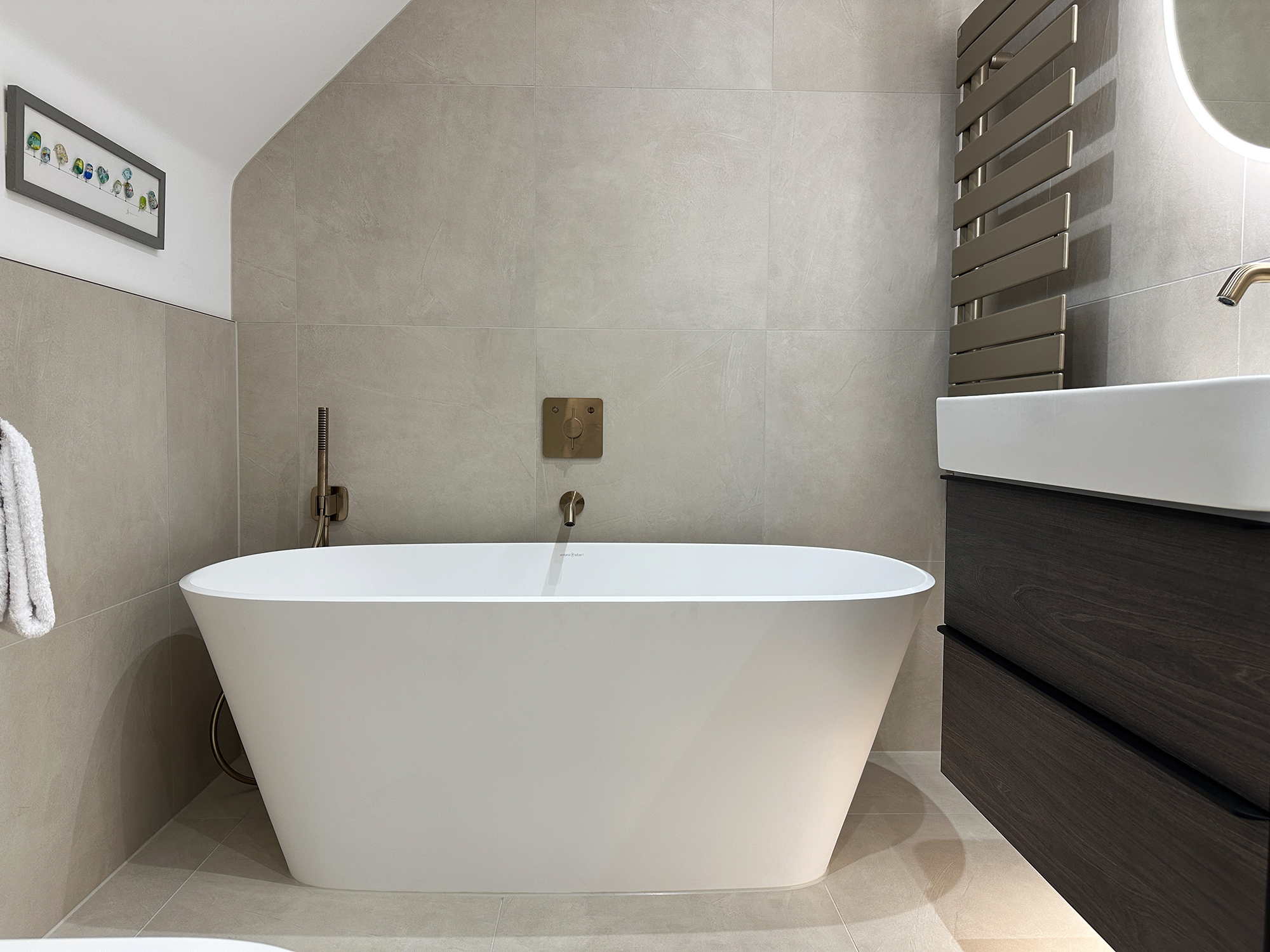
The materials you choose set the tone for the whole room. In a period property, you want surfaces that feel substantial. Thin, glossy, or overly engineered finishes can look out of place against original plasterwork or aged timber.
A few combinations that tend to work beautifully in these homes:
- Honed marble or limestone flooring paired with brushed brass fittings
- Wood panelled walls, painted in a heritage colour, alongside a stone topped vanity
- Hand glazed ceramic tiles, slightly irregular, against brushed bronze taps
- Terrazzo or encaustic floor tiles in smaller spaces, where pattern adds personality
Brass and aged brass have made a notable comeback over the last few years, and they sit particularly well with the warm tones of older homes. Chrome still has its place, especially in lighter, more pared back schemes, but mixing metals thoughtfully is no longer the design crime it once was.
Lighting, layout, and LEDs
Lighting in a period bathroom often gets overlooked, which is a shame because it’s one of the most effective ways to set the mood. A single ceiling light is rarely enough. Layer your lighting so you can switch between bright and practical for the morning and soft and atmospheric for the evening. Use lighting technology here – you don’t have to be stuck in the past to keep sympathetic design!
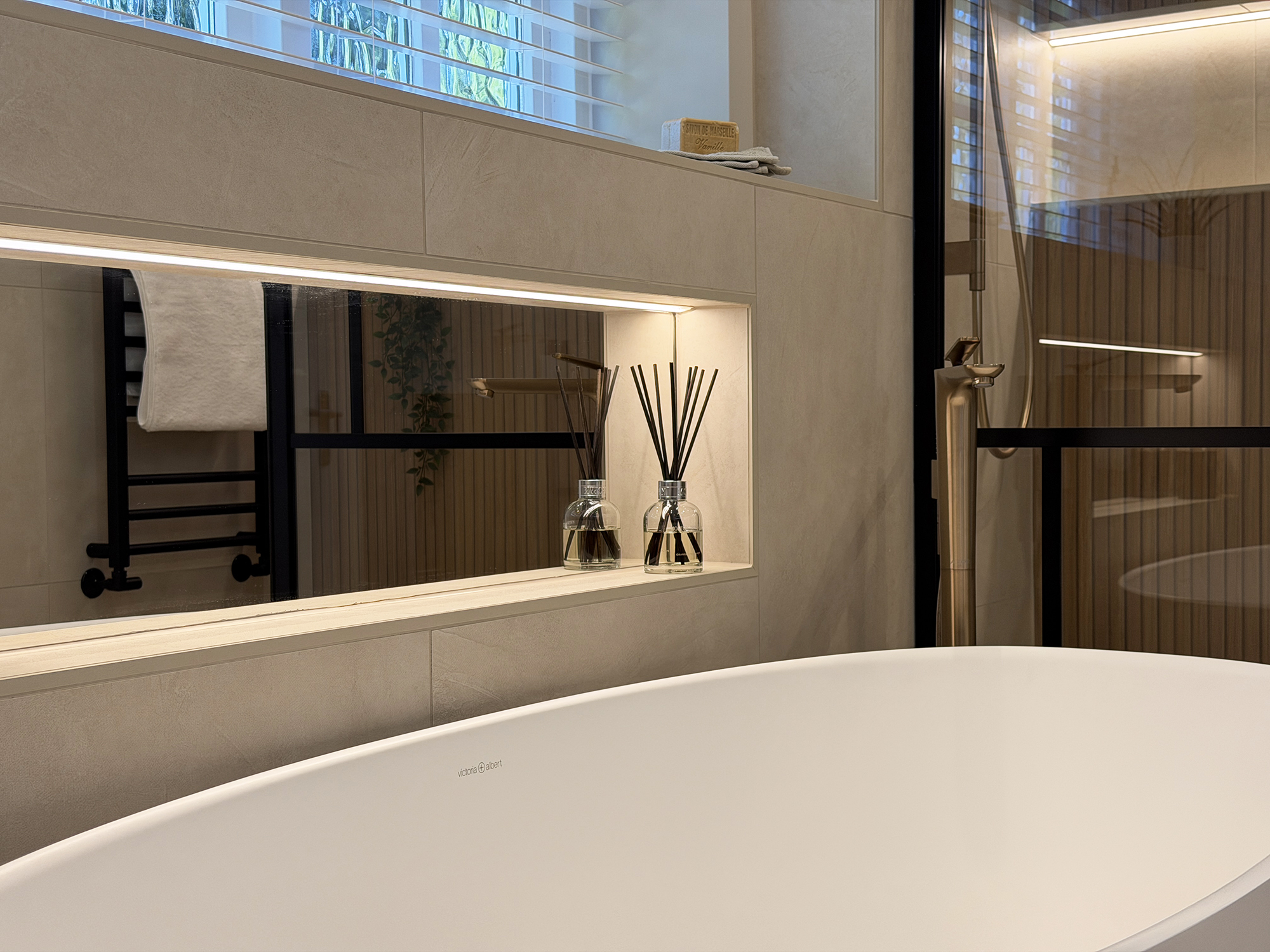
Our signature design feature is the LED lit recessed shelf, and it’s genuinely changed how many of our clients use their bathrooms. Set into the wall of a shower, beside a freestanding bath, or on a feature wall for display, the recessed shelf does two jobs at once. It gives you somewhere to keep the things you actually use, and it provides a warm, indirect glow that flatters both the room and the person in it. You can read more on our take on bathroom lighting ideas with wow factor.
In a period property, the recessed shelf is particularly useful because it lets you build in storage without cluttering the room with extra furniture. It also works well within a wet room design, where keeping surfaces clear is part of the appeal.
High / low: where to spend and where to save
You don’t need to spend the same on every square inch of the room. A considered high / low approach gives you room to invest where it matters and pull back where it doesn’t. We’ve written about high / low in bathroom design in more detail, but here’s a quick view of where the money tends to go furthest in a period bathroom:
| Spend more on | Spend less on |
| The bath, especially if freestanding | Accent tiles used sparingly |
| Brassware and tap finishes | Standard wall paint in heritage shades |
| Stone or marble surfaces | Storage baskets and accessories |
| Bespoke joinery for alcoves | Mirrors, where simpler often looks better |
| Underfloor heating | Towel rails, where mid range options work well |
The principle is simple. The pieces you touch, see, and rely on every day are worth the investment. The finishing touches can be more relaxed if you’re running on a tight budget.
Bespoke and luxury: knowing the difference
The words luxury and bespoke get used interchangeably, but they aren’t quite the same thing. A luxury bathroom describes the feel and finish of the room. A bespoke bathroom is one designed specifically for your space, your habits, and your home. We’ve explored the distinction in more detail when we talked about whether a bespoke bathroom is the same as a luxury bathroom.
For a period property, the bespoke approach should be the priority. You’re unlikely to find off the shelf cabinetry that fits a Victorian alcove exactly, and standard shower trays rarely accommodate sloping floors gracefully. Designing the room around the building, rather than the other way around, almost always gives you a better result. And that result may well be a luxury finish as well!
Practical considerations for older homes
A few things worth thinking about before you set your heart on a specific design concept:
- Older homes often have lower water pressure, so check this before specifying a rainfall shower or pressure dependent fittings
- Listed buildings come with restrictions on what you can change, particularly to windows and external walls, so speak to your local planning office early
- Damp and ventilation are common issues in older bathrooms, and a proper extractor with humidity sensing is worth every penny
- Pipework runs in period properties are rarely straightforward, which is one reason a designer who has worked with similar homes is worth their fee
If you’d like more general inspiration before settling on a direction, our round up of stylish bathroom ideas is a good place to wander.

Bringing it all together
A luxury bathroom in a Surrey period home should feel calm, considered, and unmistakably yours. Lean into the character of the building, choose materials that age well, layer your lighting, and don’t be afraid to invest in the details you’ll use every day. The result is a room that earns its place in the rest of the home rather than sitting awkwardly alongside it.
If you’re thinking about a project of your own, we’d love to hear about it. Get in touch with Stone & Chrome to talk through your ideas and see how a bespoke approach could work in your home.
FAQs
Can I install a wet room in a period property?
Yes, in most cases. The main considerations are floor structure, drainage, and waterproofing, all of which can be addressed with proper design. Older timber floors need to be assessed for strength and movement, and you’ll want to make sure ventilation is up to the job. A bespoke designer will work through these before any tiles go down.
How long does a bespoke bathroom project typically take?
From first design conversation to finished room, you should expect around twelve to twenty weeks, depending on the scope and the property. Period homes sometimes need extra time for structural prep, planning approval, or sourcing materials that suit the building. Rushing the design stage is the most common mistake, and the one that can cause upheaval later.
Will modernising my bathroom affect the character of my period home?
It doesn’t have to. The best period bathrooms combine the comforts you expect today, like underfloor heating, good showers, and clever storage, with materials and details that respect the age of the building. The contemporary parts can be kept discreet, so the room reads as part of the home rather than an incongruity.