
Quick takeaway
Choosing the right stone for your wet room comes down to balancing three things: water resistance, visual impact, and how you want the space to feel. Large format porcelain tiles offer durability and seamless looks, marble brings timeless luxury (with a bit more upkeep), and microcement creates a contemporary, joint-free finish. Pair your chosen surface with thoughtful design features like LED lit recessed shelving, and you’ll have a wet room that’s as functional as it is beautiful.
Table of Contents
Why stone choice matters more in a wet room
The main stone options for wet rooms
Matching stone to the mood you want
Our signature feature: LED lit recessed shelving
Quick comparison of wet room stone options
Applying the same principles to shower spaces
FAQs
You’ve decided to go ahead with a wet room. Brilliant choice. But now you’re staring at swatches, samples, and a thousand Pinterest boards, and the sheer number of stone options feels a bit much. Marble or porcelain? Large format or mosaic? What on earth is microcement? And which of these will still look gorgeous in ten years when your taste has inevitably evolved?
At Stone & Chrome, we’ve designed and installed bespoke bathrooms across Surrey, Berkshire, Hampshire, and London for years. We know that the stone you choose isn’t a minor detail. In a wet room, where waterproofing runs from floor to ceiling, your stone is the room. It sets the mood, defines the style, and (if chosen well) makes the space feel calm, energising, or wonderfully indulgent depending on what you’re after.
This guide explains your main options, helps you think about the feel you want to create, and shows you how clever design features can lift a simple stone choice into something truly bespoke. We want you to have a much clearer sense of what works for your home and your way of living.
Why stone choice matters more in a wet room
A standard bathroom forgives a few design compromises. A wet room doesn’t. Because the whole space is waterproofed and water can hit any surface, your stone needs to perform as hard as it looks. That means thinking about porosity, slip resistance, and how the material handles steam and temperature changes, alongside the obvious aesthetic considerations.
Of course, improved manufacturing techniques have expanded your options enormously. You can have the look of natural marble with the practical benefits of porcelain, or skip tiles altogether with a seamless microcement finish. The trick is matching the material to your lifestyle, not just your mood board. Take a look at our guide on transforming your bathroom into a wet room for the practical groundwork.
The main stone options for wet rooms
Marble: timeless luxury
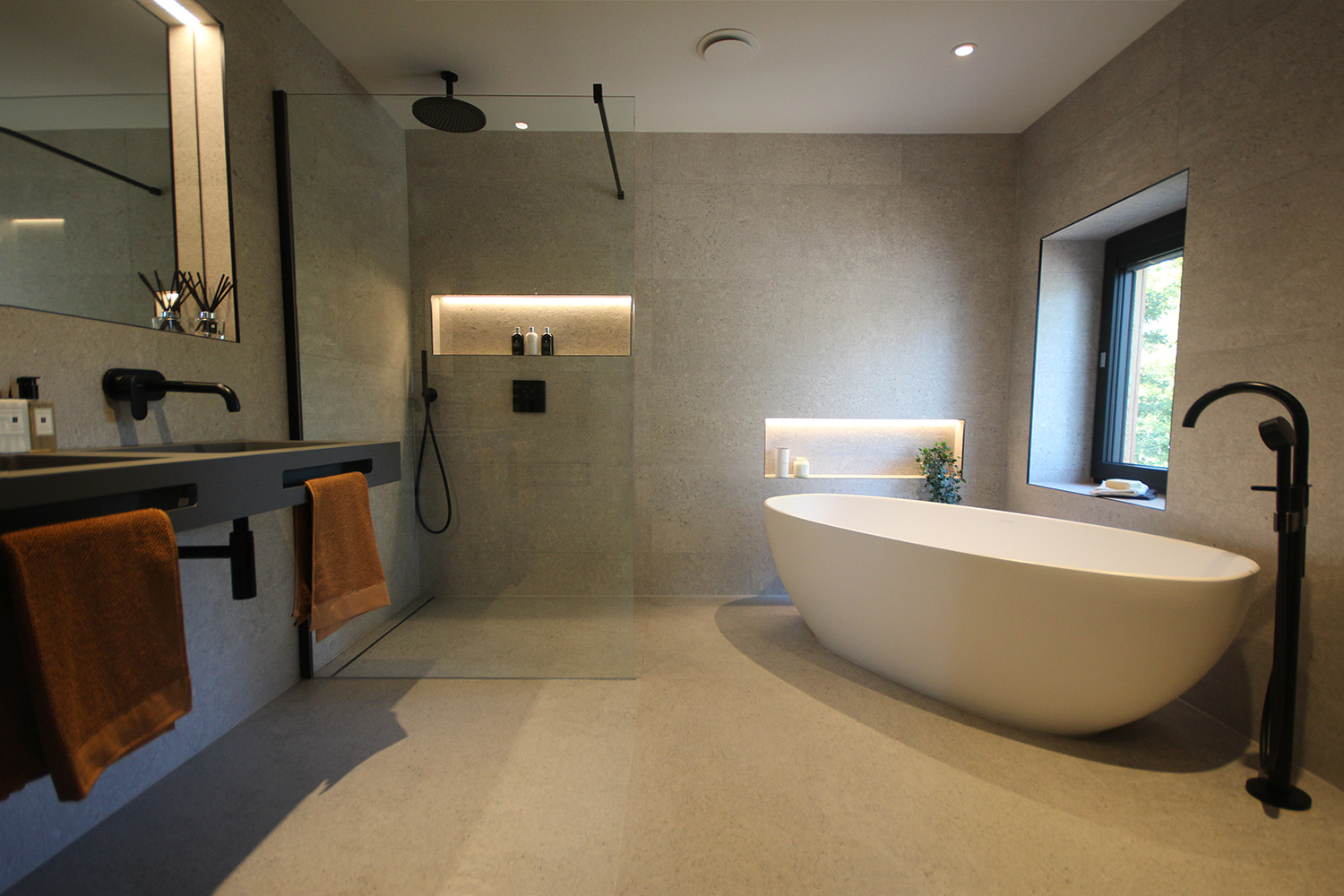
Marble brings depth, character, and that unmistakable sense of opulence. Each slab is unique, with veining that adds genuine personality to the space. For a relaxing, spa-like wet room, marble in soft greys, creams, or warm beiges is hard to beat.
One thing you must remember though is that marble is porous and needs sealing to handle daily wet room use. It also shows water marks more readily than porcelain. If you love the look and don’t mind a bit of regular care, it’s a wonderful choice. Our piece on choosing marble or porcelain goes into more detail on making this decision.
Porcelain: the practical performer
Large format porcelain tiles have become a wet room favourite, and for good reason. They’re virtually non-porous, highly durable, and now come in finishes that convincingly mimic marble, travertine, concrete, and other natural stones. Large format means fewer grout lines, which translates to a sleeker look and less cleaning.
Porcelain works particularly well if you want a flawless, low-maintenance space without sacrificing visual impact. It’s also kinder to your budget than natural stone, leaving room in the budget for other features.

Microcement: seamless and contemporary
Microcement is a thin, hardwearing cement-based coating that creates a completely seamless finish across walls, floors, and even shower areas. There are no grout lines, no tile edges, just a continuous surface that feels architectural and grown-up.
It suits contemporary homes beautifully and works wonderfully in smaller wet rooms where uninterrupted surfaces make the space feel larger. Available in muted earthy tones through to deeper, more dramatic shades, microcement gives you a lot of design flexibility.
Natural stone alternatives
Travertine, limestone, and slate each bring their own personality. Travertine offers warm, honeyed tones that feel Mediterranean and inviting. Slate brings drama and texture, particularly good for an energising, modern scheme. Limestone sits somewhere in between, offering soft natural colour with a refined finish. Remember that all natural stones need proper sealing for wet room use.
Matching stone to the mood you want
Different stone finishes naturally reflect specific design concepts, and it’s worth being intentional about this from the start.
- For a spa-like, restful wet room, look at soft marble, warm travertine, or muted microcement in cream, taupe, or pale grey. Head to our guide on designing a relaxing bathroom to explore this further
- For an energising, contemporary feel, consider darker porcelain, slate, or microcement in charcoal or deeper greens. Pair with brighter metalwork for contrast, and pay attention to you lighting design.
- For depth and contrast, mix two finishes thoughtfully. A pale microcement floor with a dramatic marble feature wall in the shower area creates real visual interest, which ties in nicely with the high low approach to bathroom design.
Our signature feature: LED lit recessed shelving
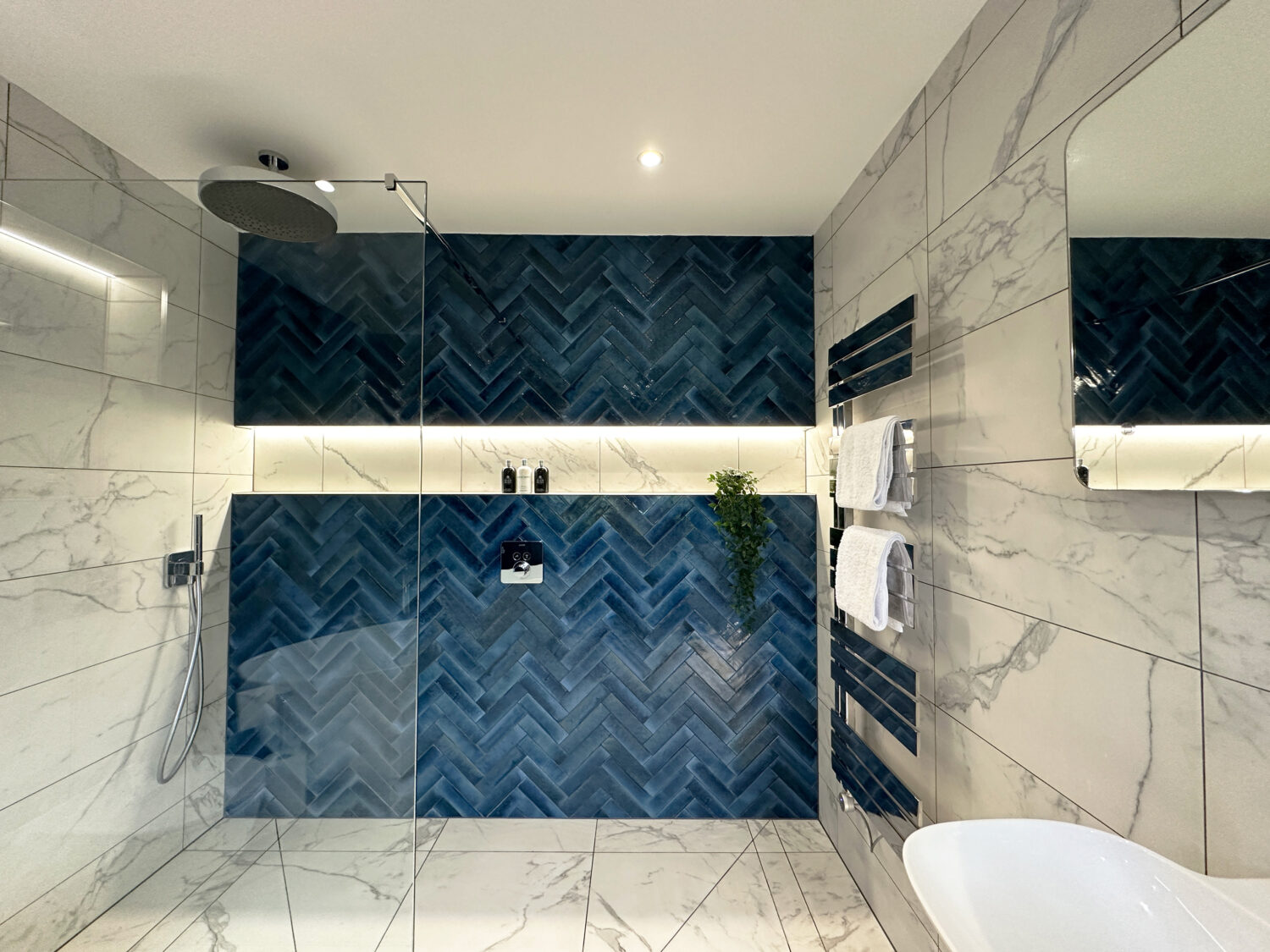
Whichever stone you choose, the way you finish it determines whether your wet room feels good or feels exceptional. One of our signature features at Stone & Chrome is LED lit recessed shelving, built directly into walls.
These recessed niches sit flush within the shower area, alongside your bathtub, or as display shelving on a feature wall. The integrated LED lighting creates a soft glow that highlights the natural character of the stone, particularly the veining in marble or the texture of microcement. They’ll give you practical storage whilst working hard to aesthetically elevate the whole space.
With changeable LED options, your lighting can move from warm white for a spa atmosphere or cooler for a more modern, energising feel. It’s the kind of detail that separates a bespoke bathroom from a standard one.
Quick comparison of wet room stone options
| Stone option | Best for | Maintenance | Visual impact |
| Marble | Timeless luxury, spa feel | Regular sealing needed | High, unique veining |
| Large format porcelain | Modern, low-maintenance | Very low | High, fewer grout lines |
| Microcement | Contemporary, seamless | Low, occasional resealing | Distinctive, architectural |
| Travertine | Warm, natural feel | Sealing required | Medium, soft texture |
| Slate | Energising, dramatic | Sealing required | High, textured |
Applying the same principles to shower spaces
If you’re not ready for a full wet room, the same logic applies to a walk in shower area. Depending on the building structure, you might include a completely dedicated tiled shower enclosure within a more traditional bathroom layout. Large format porcelain or a single slab of marble can create a real focal point, and recessed lit shelving works just as well here.
For inspiration on planning your space, our guide to bathroom design for Surrey homes covers the practical considerations of space and lighting, and our wet room design page shows what’s possible when stone, lighting, and layout come together properly.
Choosing the right stone is the foundation of a wet room that you’ll love for years. Get this decision right and everything else falls into place around it. For expert guidance on bringing your wet room or shower space to life, we’d love to chat, so get in touch with us or pop into the Stone & Chrome showroom.
FAQs
Which stone is best for a low-maintenance wet room?
Large format porcelain is your easiest option. It’s non-porous, doesn’t need sealing, and modern finishes give you the look of natural stone without the upkeep. Microcement is another excellent low-maintenance choice, with the added benefit of a seamless finish.
Can I mix different stones in one wet room?
Absolutely, and done well it adds real depth. A common approach is pairing a neutral floor with a feature wall in marble or a more textured natural stone. The key is keeping the colour palette cohesive so the contrast feels intentional rather than busy.
How long does a stone wet room installation take?
Timings vary depending on the size of the space and the materials chosen, but most bespoke wet room projects run between four and eight weeks from start to finish. Waterproofing, tiling, and stone work need proper time to be done well, so this stage should not be rushed.