
Quick takeaway
The hidden cost of bathroom renovation usually come from changes made mid-project, items missing from the original plan, and problems uncovered once the old suite comes out. You can avoid most of them by finalising your design before work begins, using a high/low design scheme, checking your choices in a showroom, setting aside a 10 to 15% contingency, and working with an experienced design and installation team.
Table of Contents
Where do hidden bathroom renovation costs come from?
Research and plan before any work
Use a high/low design scheme
Visit a showroom
Budget with contingency
Work with professionals
Hidden cost of bathroom renovation at a glance
Plan now, relax later
FAQs
Sticking to a budget is the biggest challenge of any home improvement project, and bathroom renovations are no exception. Your perfect tiles cost a little more than you’d hoped, a lit mirror turns out to make a genuine difference to your morning routine, and then the pipework decides to spring a surprise of its own.
We’ve spent many years designing and installing luxury bathrooms across Surrey, Hampshire, Berkshire, and London, and we’ve seen every surprise a bathroom can produce.
No project is ever entirely surprise-free, but most of the hidden cost of bathroom renovation can be planned away. Here are our insider tips for keeping yours to a minimum.
Where do hidden bathroom renovation costs come from?
Most hidden costs fall into three groups: changes made after work begins, items missing from the original plan, and problems uncovered once the old suite comes out. The first two are within your control. The third is less predictable, but a sensible contingency and an experienced team will take the sting out of it. The five steps below tackle all three.
Research and plan before any work
A finalised design is your best defence against budget creep. Changes made on paper cost nothing; changes made on site cost money, time, and occasionally your installer’s good humour.
Before work begins, pin down:
- The layout, including any plumbing or electrical points that need to move
- Every fitting and finish, from the bath down to the towel rail
- A complete lighting plan, including any feature lighting
- Storage, both open and concealed
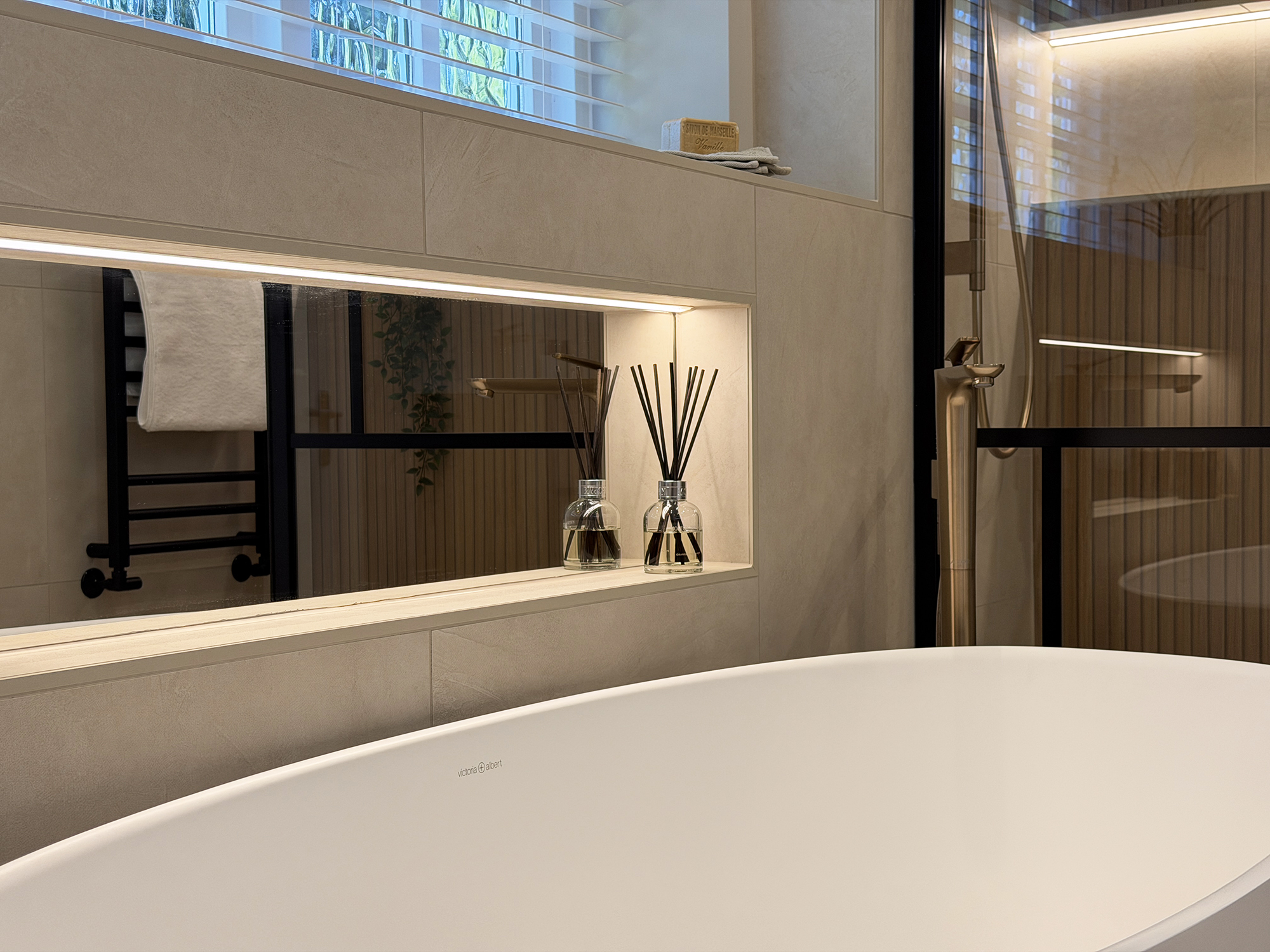
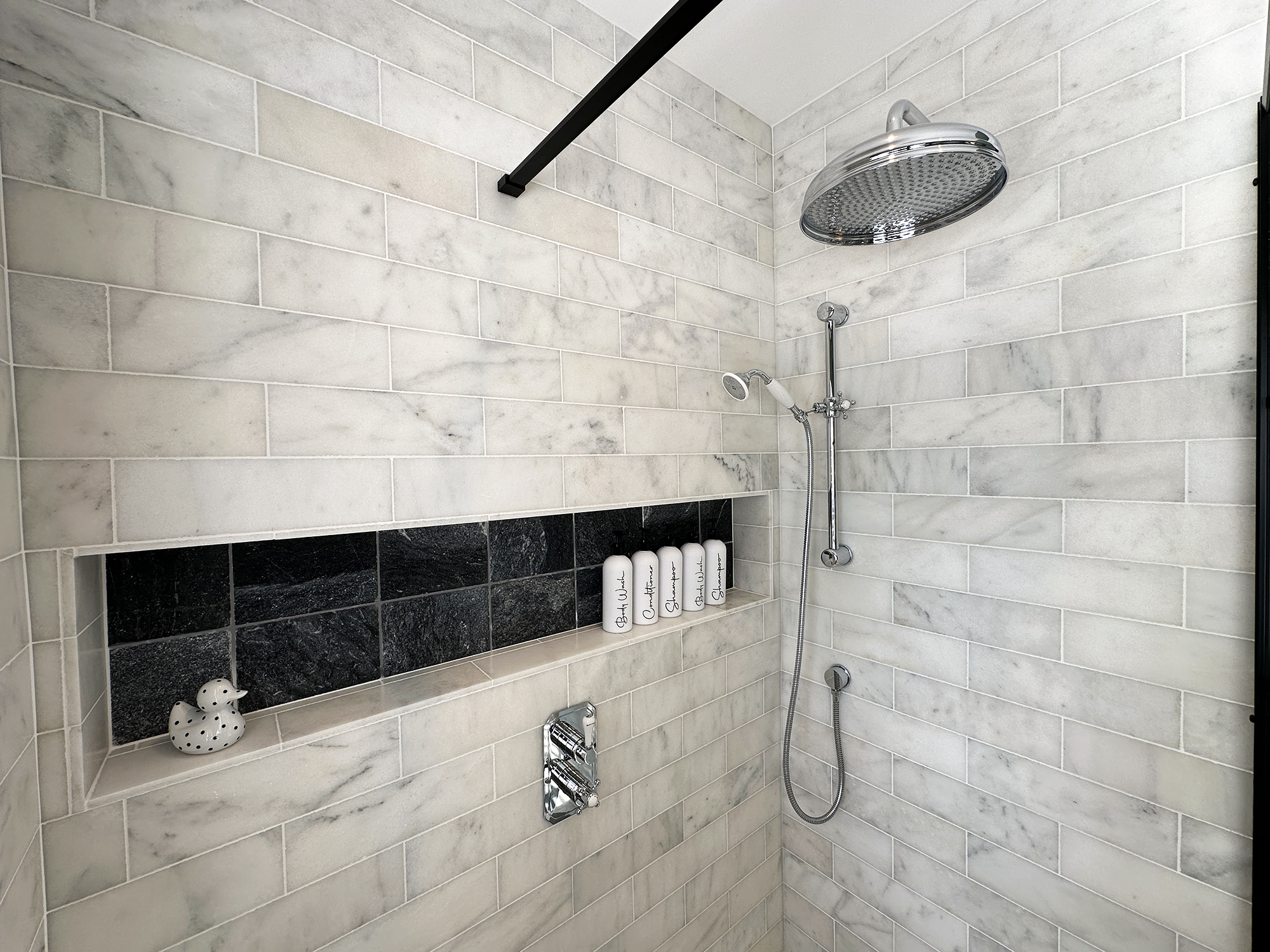
Built-in features deserve particular attention at this stage. Our signature LED lit recessed shelving, for example, sits within the wall itself, whether inside a shower enclosure, alongside a bathtub, or as a display niche elsewhere in the room. Designed in from day one, it adds light, storage, and a touch of theatre with no fuss at all. Decided on halfway through tiling, it means opening up a finished wall, and your budget along with it.
For more on getting the foundations right, read our guide to bathroom design planning for Surrey homes, and if you’re still gathering inspiration, browse these stylish bathroom ideas before you settle on a direction.
Use a high/low design scheme
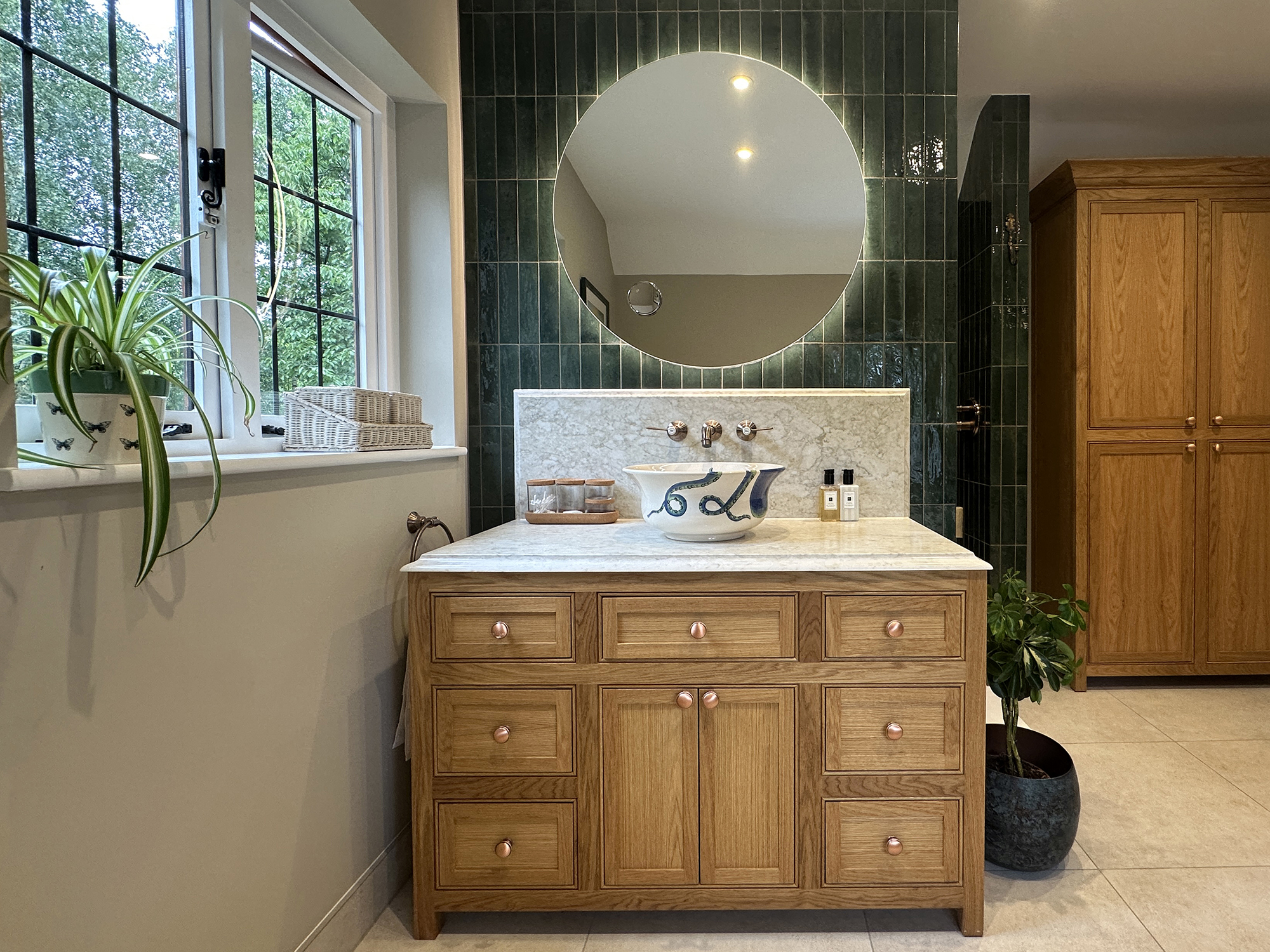
A high/low scheme means investing in the pieces you’ll see and touch every day, then saving on items where mid-range quality performs perfectly well. Spend on your brassware, shower, and feature tiles. Save on fittings hidden from view or easily upgraded later. Done well, the saves fund the splurges and the finished room still looks luxurious and elegant.
We’ve written a full guide to getting high/low bathroom design right if you’d like to see how the balancing act works in more detail.
Visit a showroom
Screens flatter some products and flatten others. A tile that looks softly neutral online can arrive with a pink undertone you never expected, and a basin that photographs generously can turn out to be surprisingly diminutive in real life. Visiting a showroom lets you check colour, scale, and feel before you commit, which costs far less than discovering a mismatch after delivery.
Restocking fees, return postage on heavy ceramics, and project delays while replacements arrive are classic hidden costs, and a single showroom visit avoids them all.
Budget with contingency
Set aside 10 to 15% of your budget for the unexpected. Bathrooms hide their problems behind tiles and under floors, and you’ll only meet them once the old suite comes out. The usual suspects include:
- Corroded or awkwardly routed pipework that needs replacing
- Water damage or rot beneath flooring from slow historic leaks
- Walls that need replastering once old tiles come off
- Electrics that need upgrading to meet current regulations
If the contingency goes unspent, you’ve earned yourself nicer towels. If it doesn’t, you’ve avoided a mid-project scramble for funds. Our article on a realistic cost for a bathroom refit in Surrey gives a fuller picture of what to expect.
Work with professionals
Of course we’d say this. But there are practical reasons why professional design and installation costs less than it first appears.
We know product dimensions and specifications by heart, so near miss measurements and ill fitting fixtures don’t make it past the drawing stage. We have long standing supplier relationships, which often means sourcing items quicker and at better prices than retail. And when something unexpected does appear behind a wall, the chances are we’ve solved the same problem before, without the trial and error that inflates a bill.
A bespoke bathroom is designed around your space and routine from the outset, which removes most of the guesswork that creates hidden costs in the first place.
Hidden cost of bathroom renovation at a glance
| Hidden cost | How to avoid it |
| Mid-project design changes | Finalise the full design before work begins |
| Overspending on every single item | Use a high/low scheme to balance budget |
| Returns, restocking fees and delivery delays | Check products in a showroom before ordering |
| Surprises behind walls and under floors | Hold back a 10 to 15% contingency |
| Measurement and specification errors | Work with an experienced design and installation team |
Plan now, relax later
A bathroom renovation will always hold one or two surprises, but with a finalised design, a sensible contingency, and the right team, none of them needs to derail your budget. If you’re planning a new bathroom in Surrey, Hampshire, Berkshire, or London, get in touch with Stone & Chrome and we’ll help you find your hidden cost of bathroom renovation before it finds you.
FAQs
How much contingency should I budget for a bathroom renovation?
Set aside 10 to 15% of your total budget. Older properties sit at the higher end of that range, since dated pipework, historic leaks, and previous DIY adventures are more likely to surface during the strip out.
What causes the most unexpected cost in a bathroom renovation?
Changes made after work has started. Moving a fitting, swapping tiles, or adding a feature mid-project means redoing completed work, reordering materials, and extending labour time. A finalised design prevents almost all of it.
Will hiring a bathroom designer save me money overall?
In most cases, yes. A designer prevents costly measurement and specification errors, sources products through trade relationships, and resolves on-site surprises quickly. The design fee typically costs less than the mistakes it prevents.